Animals
The Honey Bee Colony Between Two Garages
The comb that was there first
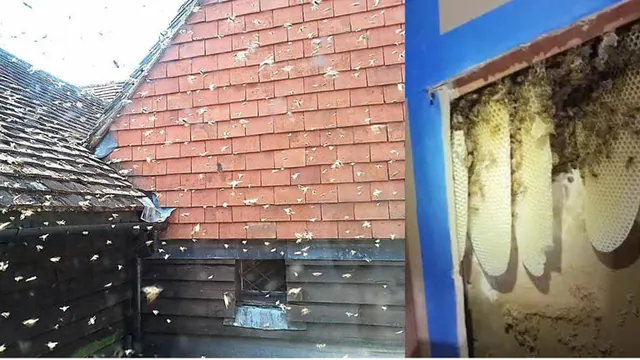
The roofs were where Joy Chew noticed the buzzing. The bees themselves were in the space between her garage and her neighbor’s in Orinda, California. Chew described the discovery on Reddit in April 2023. A bee removal specialist used a camera to get a look into the gap. The camera showed an active colony, and right beside it was comb that the bees had already abandoned.
The old wax may have had something to do with the new colony. UC Statewide IPM explains that scout bees can pick up the smell of beeswax long after the bees that made it are gone. The smell can draw them to a space that once held a hive. That makes the empty comb a clue. It doesn’t tell us what these particular bees picked up on when they found the gap.
Chew put the job at about ten hours from finding the colony through making repairs. The specialist worked with a beekeeper who took the live bees, and the crew closed the entrance once the removal was done. The detail about repairs is worth keeping in mind. With bees in a spot between two buildings, there’s a question of how to get to the colony and another one of how to close up the space afterward.
A cluster outside or a colony inside?
A group of bees hanging from a tree branch may just be resting. UGA Cooperative Extension explains that a swarm can cluster in the open while scout bees look for somewhere to nest. If the branch is away from people and pets, give the bees space to move on. A cluster beside the front door or along a path people need to use is a reason to call a local beekeeper. Keep children and pets clear of the area while you get advice.
The thing to notice around a building is where the bees go. If they keep flying in and out through the same gap in the siding or under the roof, there may be a colony inside. Leave the opening undisturbed and tell a structural bee removal specialist what you’ve seen. Ask who will handle the live bees and who will open and repair the wall if the job calls for it. If the work is split between a contractor and a beekeeper, ask how they’ll coordinate access, removal and repairs.
The comb has to be part of the plan too. Honey left inside a wall can ferment or seep out. Ask whether the specialist will remove the comb along with the bees and check the area for other openings. Closing those gaps after the cavity is clear can make it harder for another colony to move in. That’s a conversation to have before anyone starts opening the wall.