Animals
When Jaguars Cross Paths in Brazil’s Pantanal
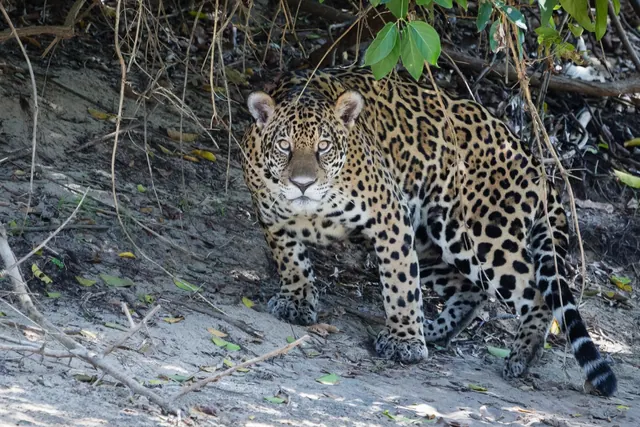
Two jaguar sisters from different litters groomed each other in Brazil’s northern Pantanal, Mongabay reported. A jaguar can go about much of its life alone. To learn how these cats respond to one another, researchers had to see which animals crossed paths and what happened when they did. In the Pantanal, they spent years learning to tell one spotted cat from another.
In a 13-year study of Pantanal jaguars, researchers logged 167 encounters involving 69 animals. Some cats played or traveled together. Others rested or hunted independently in the same area. Some encounters were aggressive. The encounters made up about 2 percent of all the jaguar sightings in the study’s records.
The river gave observers a place to look
A field team can have good evidence that a jaguar uses an area without seeing the cat do much. A camera trap might show an animal walking past a tree one evening. The next clip, days later, might show a second jaguar on the same path. Those clips establish that both cats came through. The time stamps tell us whether the camera saw them together, and the camera can only show what happened inside its frame.
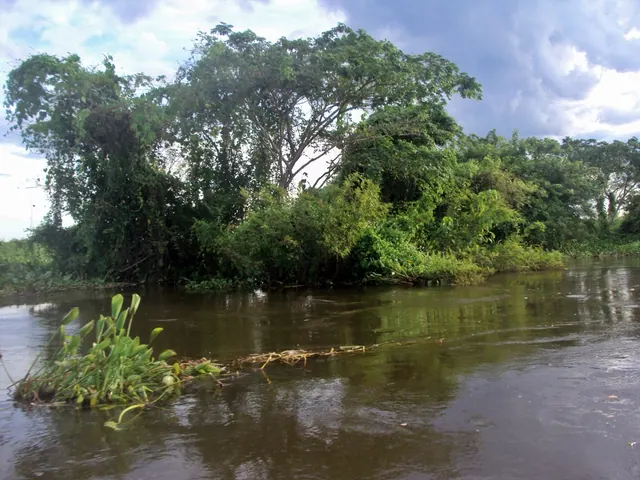
In the northern Pantanal, river surveys gave observers a different view. Between 2013 and 2025, the research team tallied 1,710 days of survey effort and recorded 2,903 jaguar sightings. Its database also held 5,476 sightings from community observers. That adds up to 8,379 records, representing 459 individual cats. If one jaguar came down to the river several times, the observers could add several sightings to the record while still tracking that animal as one individual.
There is a clue in the fur. The dark spots on a jaguar’s body form clusters called rosettes. Photographs of those markings let researchers recognize the same animal when it turns up again. A photograph that looks like a nice portrait to a visitor can do a second job in a study. It can help a researcher connect an encounter today with what people saw that cat doing months or years earlier.
A shared bank can mean several things
Think of two jaguars in the same stretch of riverbank. One could be resting while the other looks for prey. They could be moving together. One could be driving the other away. A list of which animals were present would read the same in all three cases. The behavior is what changes the story.
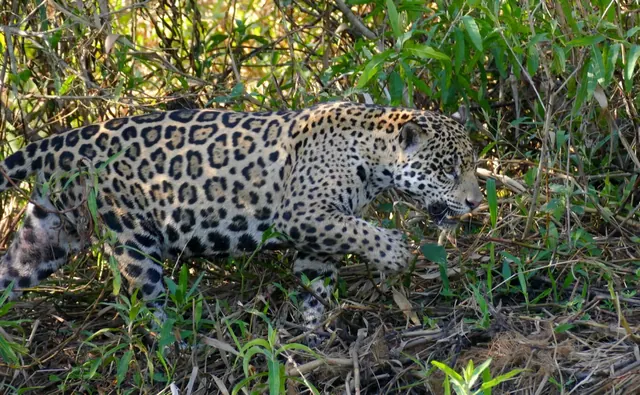
The researchers sorted the encounters along those lines. About 37 percent were neutral, such as cats hunting near each other independently. About 39 percent involved behavior like grooming, playing or moving together. Roughly a quarter were aggressive. Those percentages describe the 167 encounters researchers recorded. Most sightings in the database did not include a recorded encounter.
It also mattered which animals met. About two-thirds of the friendly interactions involved known relatives. Male–male encounters were the largest category in the records. The authors found that some cats showed up in the network of encounters more often than others. A general description of jaguars as solitary leaves room for those differences. An individual may spend much of its time alone and still have a history with particular animals that it meets again.
The cats that show up most often in a record can tell us something about their relationships. They can also tell us something about where people were able to watch. A stretch of river with open banks gives an observer a longer look than a bend with dense cover. If a cat leaves the bank, its next encounter may take place entirely out of view. The study’s long span makes it possible to compare the encounters the team did see, with that limit in mind.
Why the place matters
The northern Pantanal study’s authors suggest that a plentiful supply of prey and the cats’ family relationships could help explain why some tolerated company. One way to make sense of that idea is to ask what the animals stand to lose by sharing an area. When prey is plentiful, there may be less reason to chase away every animal that comes near. The river surveys recorded behavior as it happened, so the role of prey remains an explanation the authors propose.
A 2022 study at Taiamã Ecological Station, elsewhere in the Brazilian Pantanal, looked at a different group of jaguars in the Brazilian Pantanal. Researchers there combined camera traps, GPS tracking and analysis of jaguar droppings. Fish and aquatic reptiles were prominent in the cats’ diet. Researchers also reported jaguars fishing together, traveling together and playing. The Taiamã findings describe what the team recorded at that station. The study published this November describes encounters on the northern Pantanal rivers. Each team had its own group of animals and its own record of what they did.
The northern Pantanal study has a clear boundary. The researchers surveyed along rivers in a part of the Pantanal they describe as rich in prey. Cats that live farther from the banks, or in other parts of the jaguar’s range, may encounter one another under quite different conditions. Observers can also miss an interaction behind vegetation even when they know a jaguar is nearby. Even at a site with so many sightings, observers recorded an encounter only occasionally.
What a single sighting leaves out
If you look at a photo of one jaguar on a sandbank, you can notice its markings, the shape of the bank or where its eyes are pointed. The picture probably can’t tell you how that animal responds to a sibling. A picture of two cats together leaves a different set of questions. How long did they stay? Did they watch each other? Did they share an activity, or were they each following something along the water? Asking those questions is a small way to read a wildlife picture with the care that went into the Pantanal study.
A photograph of two cats sitting comfortably near each other leaves some of those questions open. An observer who stays with the scene can see what the animals do when one moves closer or gets up to leave. Mongabay’s account of the sisters gives us one of those details. They groomed each other. The thousands of sightings in the wider study give that one encounter a place in the record, alongside many sightings that recorded no interaction.