Animals
How Non-Native Ants Are Changing the Places They Settle
What changes when ants cross a border
Follow a line of ants along a fallen branch and you can see how much work happens at that scale. Ants move seeds, turn soil and compete for food. Which ants do that work depends partly on where you are. But human travel and trade have carried some species far beyond their native ranges, and that old pattern is beginning to blur.
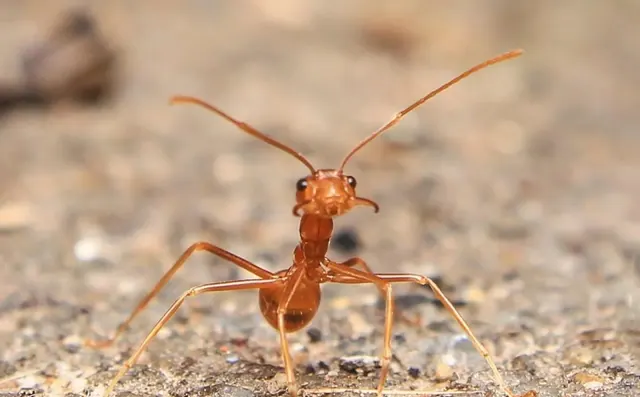
An ant can turn up in a shipment without starting a colony. The important step is establishment: a population survives and reproduces in its new home. Researchers call a species non-native when it lives outside its original range because people moved it there. Invasive species are the subset that cause harm. Finding a non-native ant, by itself, tells you very little about what it will do.
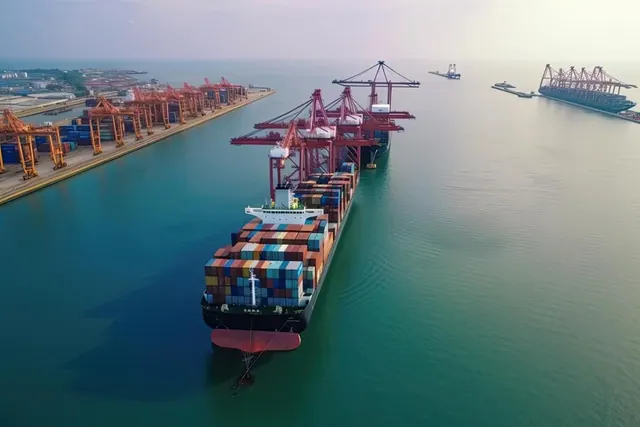
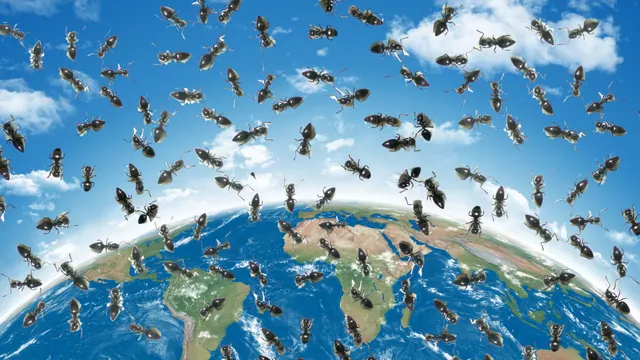
In a 2024 study in Nature Communications, researchers Lucie Aulus-Giacosa, Sébastien Ollier and Cleo Bertelsmeier examined where 309 non-native ant species had become established. They compared the distribution of ants using native ranges alone with the distribution after including introduced populations. That let them ask what changes on the world map when species no longer stay inside the boundaries that once separated them.
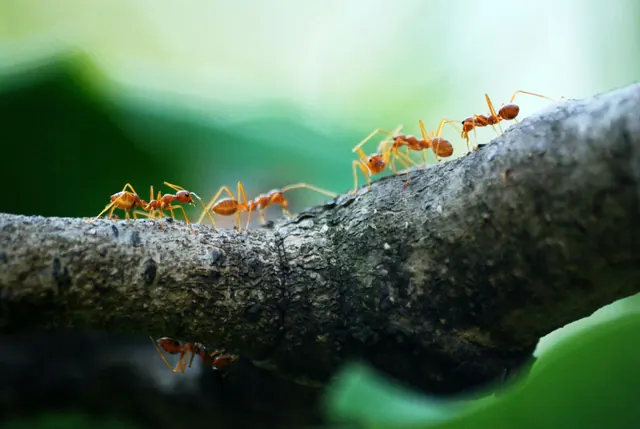
Their comparison went beyond the ants that had moved. The researchers also ran the analysis across 13,774 species with known ranges. Think of it as comparing two lists for each place: the ants recorded there naturally and the list with the newcomers added. If the same arrivals appear on many lists, those places can start to resemble each other even while they still have distinct native ants.
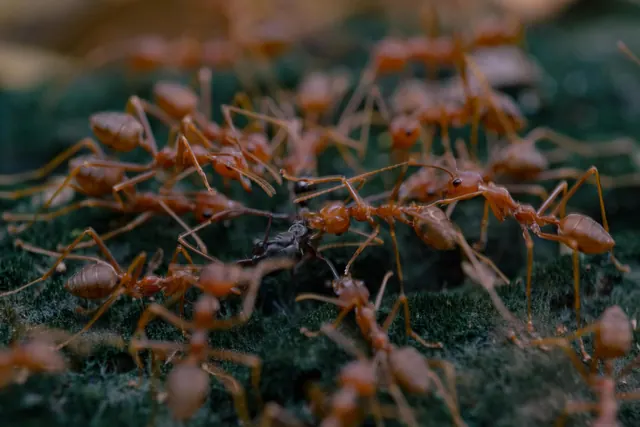
The authors found that the sharp distinctions among some regions weakened. The distributions of non-native ants were organized largely around a divide between tropical and non-tropical places. The changes were uneven: tropical islands stood out as particularly vulnerable to losing some of the differences that make their ant communities distinct.
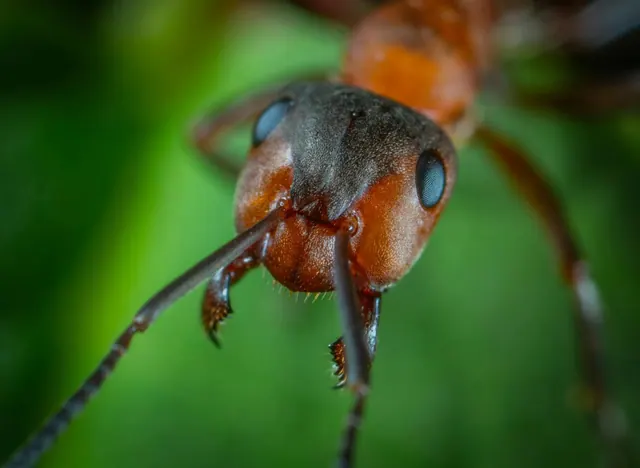
The study compared records of where ants live. It didn’t follow every shipment, watch every colony arrive or measure the same damage in each region. A species can make two lists look more alike simply by becoming established in both places. To see what an invasion can change on the ground, you need to look at how the ants interact with their neighbors.
How a tiny ant changed the view from a lion’s hiding place
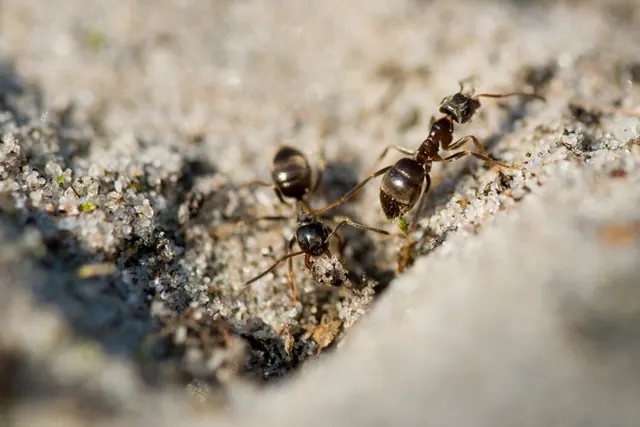
In Kenya’s Ol Pejeta Conservancy, native acacia ants live on whistling-thorn trees. The trees give the ants shelter, and the ants defend the trees when elephants come to feed. You can see why that bargain matters to the trees. It also matters to an animal that never goes near the ants for a meal: the lion.
A 2024 field study in Science traced what happened in areas invaded by big-headed ants. The newcomers displaced native ants from trees. With fewer defenders, the trees were more exposed to browsing by elephants. Over time the landscape opened up. It became easier to see through parts of the conservancy where trees had once provided cover.
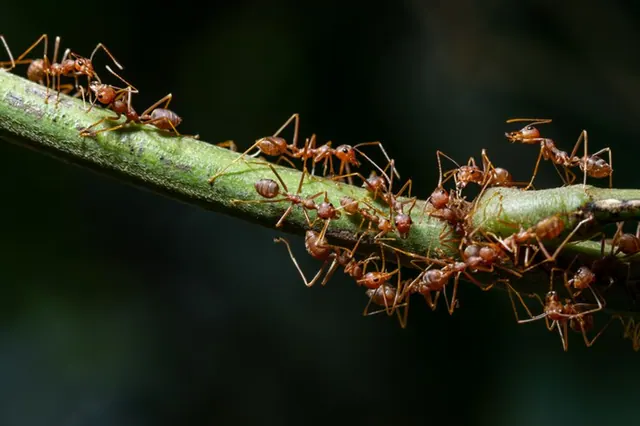
That change mattered to lions hunting plains zebras. Cover makes it easier to get close before the prey spots you. The researchers found that lions were less likely to kill zebras in the more open, invaded areas. They used field experiments, animal tracking and records of kills to connect the change in hunting to what was happening on the trees.
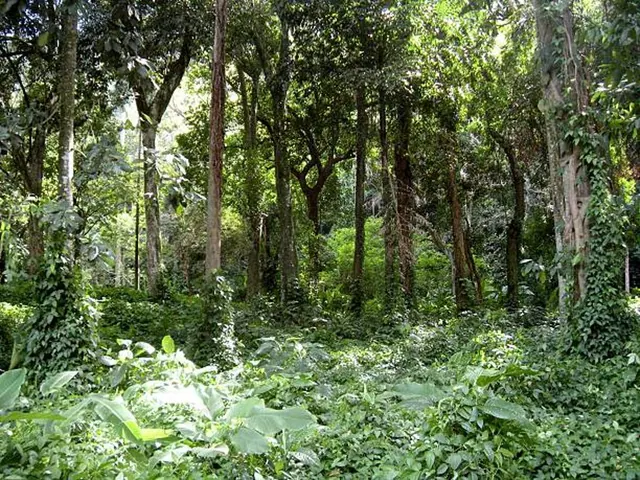
Lions in the study area didn’t vanish as the habitat changed. The team found no decline in their numbers since the invasion began and saw more buffalo among the prey. The authors suggested that switching prey helped the lions persist. That’s an explanation for the pattern they saw in this conservancy, and it doesn’t mean every predator can adapt in the same way.

There’s a useful distinction here between what researchers counted in Kenya and what the global study counted. One documented changes in where ants live. The other looked at what a particular ant did after it arrived. A map showing the same species in more places can tell you where to look. You still need field evidence to understand what the newcomers are changing.
The story also explains why calling all ants pests misses so much. The acacia ants were part of the system that kept the trees standing. Losing their protection changed how much cover was available to larger animals. In another habitat, ants might matter because they disperse seeds or move soil. The species and its relationships are what give the word invasive its meaning.
What the costs do and don’t tell us

Ecological changes are hard to put on a bill, but some consequences of invasive ants show up in budgets. A 2022 economic analysis examined published records for 12 ant species in 27 countries. The authors separated costs that had been incurred from estimates of what might be spent or lost under particular conditions.

The paper found about $10.95 billion in incurred costs and about $40.98 billion in potential costs in its database. You may see those figures combined as roughly $52 billion. That total mixes two different kinds of evidence, so it doesn’t mean that much money had already been lost. It also covers reports dating back to 1930 and isn’t an annual bill.
Agriculture and public welfare accounted for much of the damage recorded in the study. A farm can pay for losses in crops or for work to manage an infestation, while a local authority may spend money on monitoring or control. The authors found that much of the reported management spending came after invasions rather than before them.
Those figures tell us where costs were documented, which isn’t the same as knowing the cost everywhere. A species can damage an ecosystem with few dollar estimates attached to the loss. Another species may be well studied because it affects a crop or prompts an expensive response. A tidy total can hide those gaps in what has been measured.
Money also can’t tell you how to protect the ants that belong in an area. A response needs to account for what the target species is doing and for the other insects, plants and animals that share its habitat. The goal is to manage a damaging population while preserving as much of the surrounding community as possible.
That is one reason a single answer to every ant invasion would make little sense. The work in Kenya followed changes in a food web. The cost study pulled together records from farms, agencies and other sources. Each kind of evidence helps answer a different question about where to focus time and resources.
Why catching a new arrival early matters

By the time a species is established across a wide area, finding and managing every colony can be difficult. Prevention and early reporting give agencies a chance to act while a new population is still small. That’s a different task from trying to remove a species that has been in the ground for years.
New Zealand’s Ministry for Primary Industries records several earlier detections of red imported fire ants. In 2001, a member of the public reported a nest at Auckland International Airport. Later detections occurred in the Napier area. Authorities removed the infestations and continued to look for the ants, finding no evidence that those incidents had led to an established population.

The account is useful for what it actually shows: a new arrival can be detected and dealt with before it spreads. That doesn’t make eradication possible in every place. Whether it can work depends in part on how far the species has already moved and whether people can tell if it’s still present after the response.
Plant and soil movements are one place where the public can help. If you move plants across a border, check the destination’s rules before you pack them. Those rules are designed to prevent more than visible insects from traveling with the plant. For an unfamiliar insect that may be a regulated pest, the local plant health agency is a better starting point than guessing from a photograph.

Most ants you see on a walk or in a yard are simply going about their work. A crowded branch or a busy nest tells you that ants are there, not where the species came from or what it’s doing to other wildlife. Identifying the species and observing what changes around it take more care than counting how many ants you can see.
The next time you see ants moving through the grass, it’s worth looking at where the trail leads. The same routine that keeps a colony fed can be part of a bigger relationship with a plant or another animal. That’s what made the changes in Kenya worth following, and why the global maps matter: they show where relationships that took a long time to develop may be changing.