Animals
How a Small Set of Leg Bones Revealed a New Dinosaur Species
The small leg bones looked as if they belonged to a young Anzu, a dinosaur nicknamed the chicken from hell. Looking inside those bones helped Kyle Atkins-Weltman and his colleagues reach a different answer: this animal was nearing its adult size.
Their description of Eoneophron infernalis appeared in January 2024. The discovery came through examining already collected fossils, rather than finding a complete new skeleton. Here's what changed the identification, and what the finding can tell us.
The Larger Relative Called Anzu
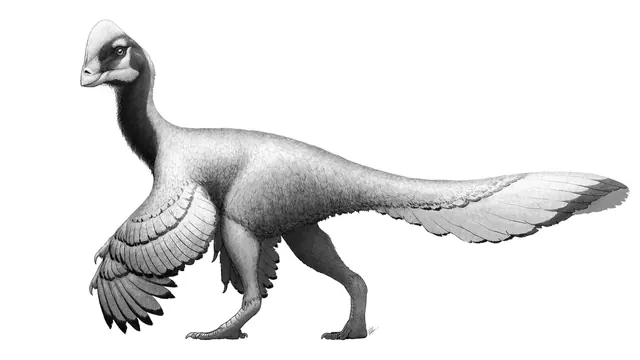
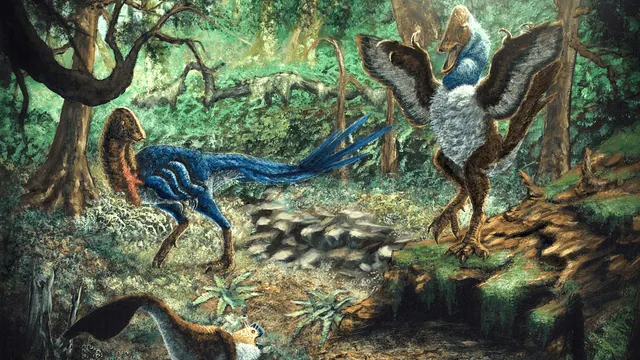
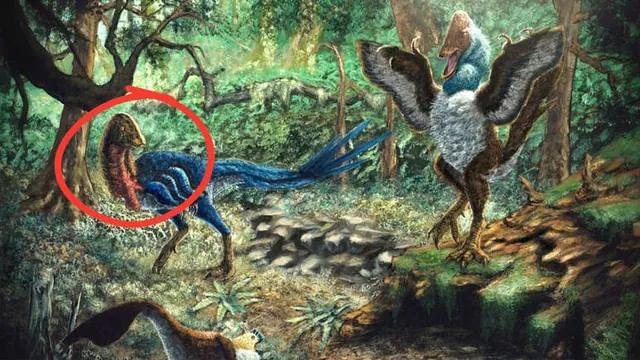
Anzu wyliei belongs to the caenagnathids, a group of birdlike dinosaurs. The Carnegie Museum describes a crested skull, a toothless beak, long legs and arms with hooked claws. At least nine feet long, Anzu was much larger than a chicken.
Its nickname doesn't settle what it ate. The museum says researchers still cannot confidently choose between a diet of plants, animals or both from its unusual jaws. The original illustration here is an artist's reconstruction.
A Smaller Foot Raised a Question
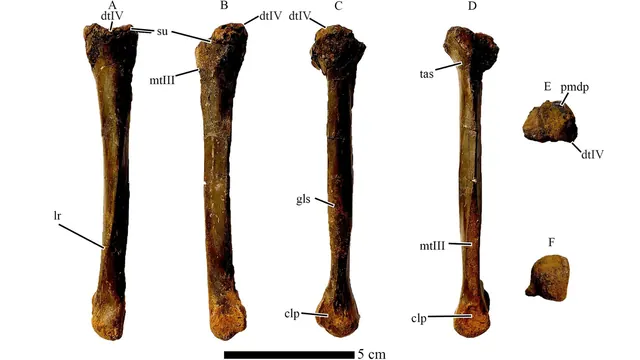
Size alone couldn't show if the newly studied bones came from a different species. A young member of a large species can be smaller than an adult of another. Researchers needed evidence of how far this individual had grown.
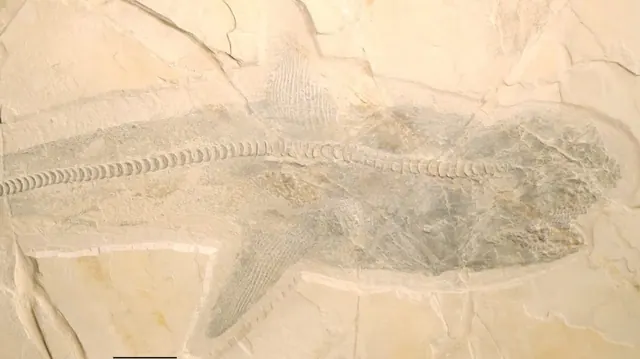
The photographed foot bone is part of that evidence. In the 2024 study, anatomical comparisons and microscopic examination of bone tissue were considered together. Neither a dramatic nickname nor a smaller measurement could substitute for those checks.
Reconstructing an Animal From Partial Remains
Oklahoma State University's account describes a birdlike animal with feathers and a toothless beak. Its rough estimates put Eoneophron at about three feet high at the hip and 150 to 160 pounds. Those figures were estimates, not measurements of a living animal.
The scene here reconstructs several caenagnathids together. The Eoneophron specimen itself consists of hindlimb material, so the finished animal in an illustration includes interpretation beyond the surviving bones.
A Name With Several References
Eoneophron combines a Greek word for dawn with Neophron, the genus name of the Egyptian vulture. Infernalis refers to Hell, echoing the Hell Creek Formation where the fossils originated. The authors render the combined name as Pharaoh's dawn chicken from Hell.
The university also explains the personal reference: Atkins-Weltman's late pet Nile monitor was called Pharaoh. The pictured inscription is an illustrative language image, not an object connected with the fossils or their naming.
Research Instead of a Movie Discovery
This wasn't a scene of someone recognizing a new dinosaur as it emerged from the ground. By the university's account, the investigation began in January 2020 with foot and leg fossils thought to be Anzu. The published description followed four years later.
The Jurassic Park entrance in this gallery is an archive image of a theme park. The actual investigation used fossil material, microscopic sections and comparisons with other known dinosaurs; the illustration should not be mistaken for a research location.
What the Leg Bones Preserved
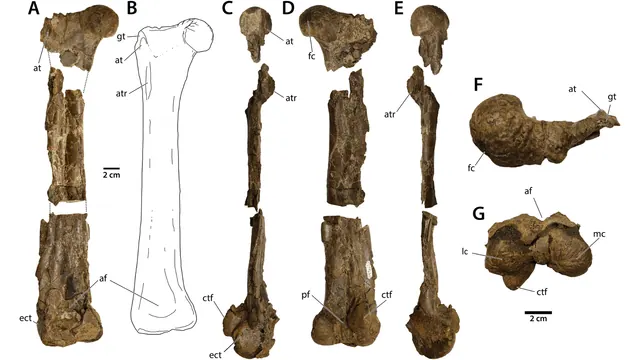
The study identifies the specimen as CM 96523, held at the Carnegie Museum of Natural History. Its remains include a femur, a tibia with associated ankle bones, and two metatarsals, or foot bones. It came from the Hell Creek Formation in Meade County, South Dakota.
Several features helped separate it from Anzu, including the angle of the femoral head, ankle bones fused to the tibia and a pronounced ridge on a foot bone. The pictured plate shows the femur from several viewpoints.
Reading Growth Inside a Bone
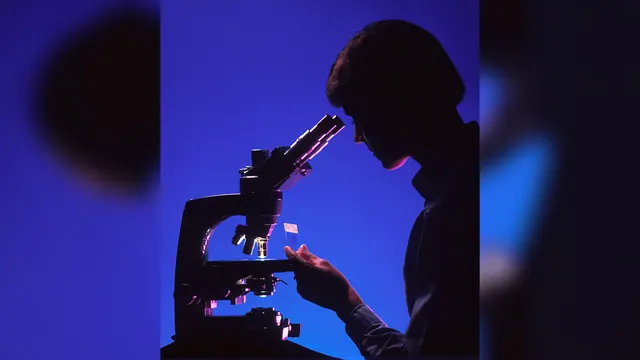
In their own account of the research, Atkins-Weltman and Eric Snively explain that the team cut sections through three bones and examined them microscopically. Lines recording pauses in growth grew closer together toward the outside.
That pattern indicated slowing growth as the animal approached adult size. It weakened the explanation that these were simply juvenile Anzu bones. The laboratory photograph is illustrative; the person shown isn't identified as a member of this research team.
The Extinction Question Remains Larger
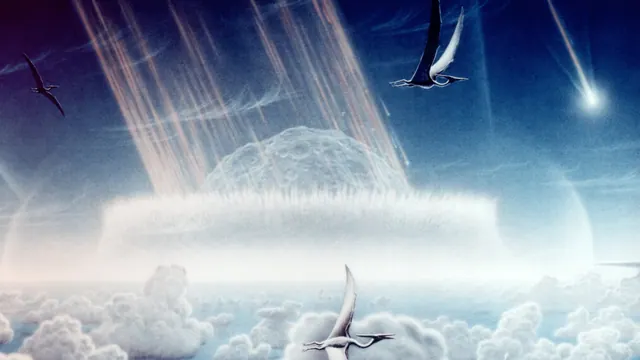
The asteroid impact about 66 million years ago marks the end of the Cretaceous and the loss of the non-avian dinosaurs. Researchers also ask how dinosaur diversity had changed before that event.
In their 2024 explanation, the authors discuss a difficulty with answering that question: the fossils people find depend partly on preservation and access to suitable rocks. A gap in the known record doesn't automatically establish that a group had already disappeared. The impact scene is an illustration.
More Diversity in One Dinosaur Group
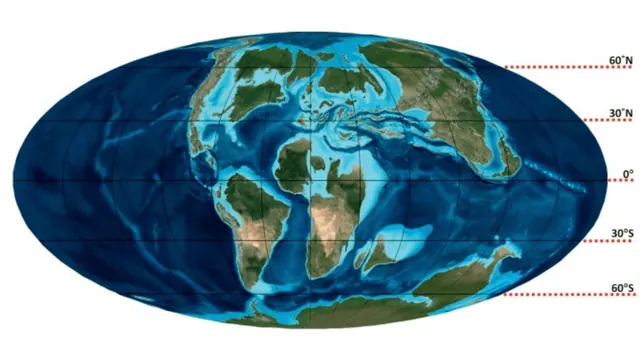
The authors found evidence for a medium-sized caenagnathid alongside the larger Anzu. They also discussed a smaller, unnamed form represented by other material. Together, those observations suggested that this group's Hell Creek diversity had been underestimated.
That conclusion concerns a particular dinosaur family and fossil record. It doesn't prove that every dinosaur population was thriving worldwide, or settle all competing explanations of changes before the impact. The map provides broad Late Cretaceous context, rather than the specimen's exact locality.
A Study With Several Contributors

The discovery was published by a team, with Kyle L. Atkins-Weltman, D. Jade Simon, Holly N. Woodward, Gregory F. Funston and Eric Snively named as authors. Their work brought anatomical comparison and bone histology into the same identification.
An article can begin with a student's unexpected finding without making the collaborators disappear. The original stock laboratory photograph remains an illustration; it is not a portrait of any of these authors.
Collections Behind the Display
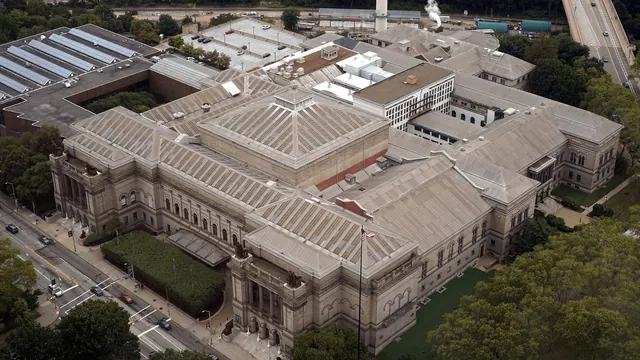
The Carnegie Museum's Anzu exhibit also shows why collection material and gallery displays need to be distinguished. The museum says its displayed Anzu skeleton is a cast combining replicas of two real specimens, whose fragile bones remain available for study.
A museum photograph alone cannot tell you which specimen is on view, or if a research specimen has entered an exhibition. This archive view of the building is context, not evidence that Eoneophron is currently displayed there.
Keeping the Identification Open to Study
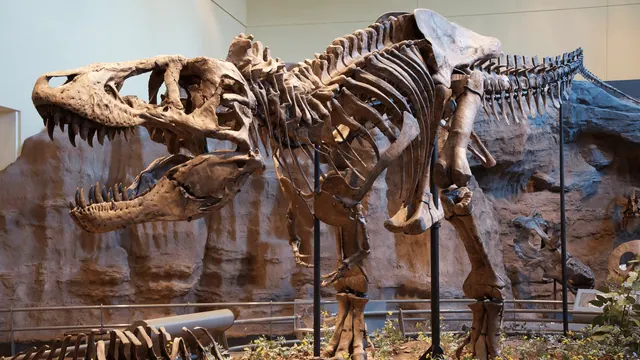
The Tyrannosaurus skeleton pictured here is another dinosaur, not Eoneophron. A large museum mount can make the small set of bones behind this discovery seem modest, but a taxonomic description depends on the evidence those bones preserve.
The 2024 paper records the specimen, comparisons and growth evidence for others to examine. The discovery rests on that documented work; it doesn't require a prediction about the researcher's next achievement.