Animals
What Sperm Whales’ Clicks Reveal About Their Communication
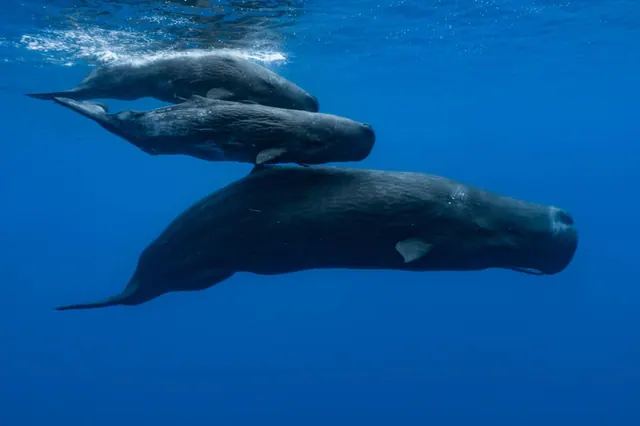
A string of underwater clicks can carry more structure than you might expect. Sperm whales vary the timing of their social calls, combine features and adjust parts of a call in relation to the sounds around it. Researchers have compared those building blocks to a phonetic alphabet.
That comparison needs care. A 2024 study revealed patterns in the sounds, not a translation of whale conversations. Research published in 2026 has added evidence about vowel-like features, while leaving the meanings of particular click sequences unresolved.
A Social Life Beneath the Surface
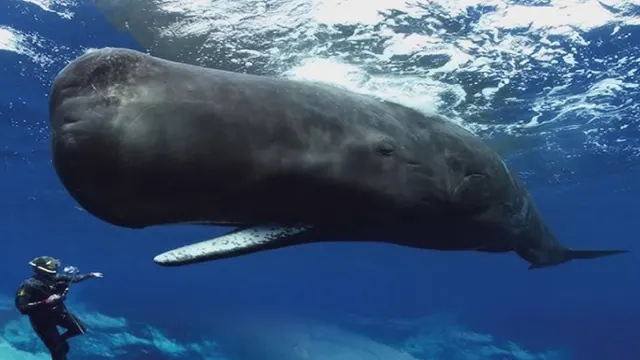
Sperm whales are the largest toothed whales. NOAA Fisheries lists typical lengths of about 40 feet for females and 52 feet for males, with substantial differences in weight as well. Their large size doesn't make their social lives easy to observe underwater.
Females and young whales live in social groups, while mature males often range more widely. Describing all of them as traveling in human-style nuclear families misses those differences. Researchers need to know which animals are present when they interpret a recording.
Listening for Social Clicks
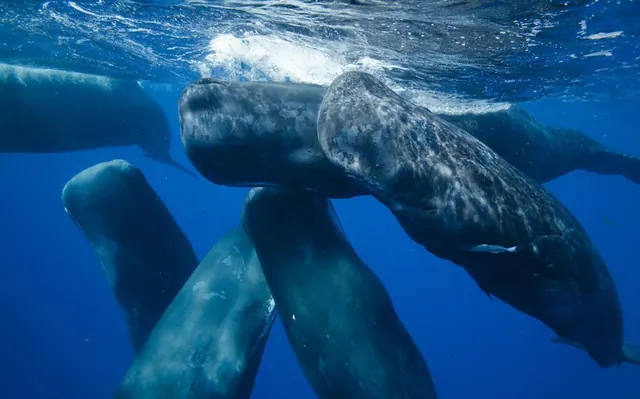
The short sequences of clicks used in social communication are called codas. They are the focus of the alphabet research. Sperm whales also use sound while finding food, so a recording of clicks isn't automatically a social exchange.
That distinction changes the research question. A scientist may be studying how an animal searches for prey, identifies itself or responds to another whale. Grouping every sound into one supposed vocabulary would hide the differences among those activities.
The 2024 Study
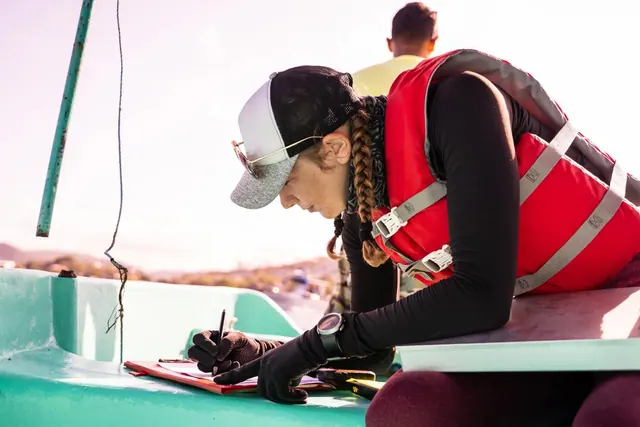
The Nature Communications paper, published on May 7, 2024, examined the structure of sperm whale codas. MIT's account describes an analysis drawing on roughly 9,000 codas collected from Eastern Caribbean whale families by the Dominica Sperm Whale Project.
Researchers combined computational methods with recordings that preserved detail about individual animals and their exchanges. That made it possible to study a call in relation to nearby calls, instead of treating each sound as an isolated entry in a catalog.
What the Alphabet Comparison Means

The researchers described four features: rhythm, tempo, rubato and ornamentation. Rhythm concerns the pattern of intervals between clicks, while tempo concerns the overall pace. Rubato describes gradual changes in a coda's duration. Ornamentation involves an additional click.
These features can combine to produce distinguishable calls. An alphabet offers a familiar way to picture that combination of building blocks. It doesn't establish that the blocks are letters spelling recognizable words, or that a whale is following the grammar of a human language.
What Machine Learning Contributes

Computer analysis can help researchers find patterns across recordings that would be difficult to organize by listening alone. It can identify recurring features and compare how they vary with the surrounding calls.
But a pattern-recognition result still needs interpretation. Giving a cluster a label doesn't reveal what an animal intended. The original gallery's laptop illustration represents computer analysis; it isn't a screenshot of the research software or evidence that a system can translate a whale's thoughts.
Connecting Recordings With Behavior
Project CETI brings together field researchers and specialists in computing, acoustics and other disciplines to investigate sperm whale communication. Its work connects sound recordings with observations of what the animals are doing.
The project describes using recording tags, underwater sound sensors and video to build that context. A call heard during one activity may need to be compared with calls from other activities and social settings. The Project CETI logo in the gallery identifies the organization; it doesn't imply its endorsement of this article.
What Changed in 2026
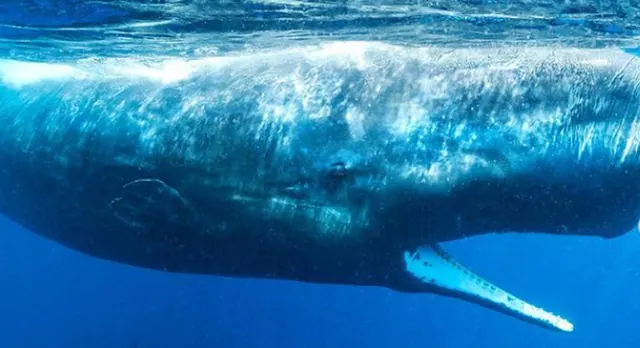
A paper published in Proceedings of the Royal Society B on April 15, 2026, examined properties the authors call coda vowels. These categories concern acoustic qualities of the clicks, rather than whales pronouncing our written vowels.
The analysis found parallels with human phonetics and phonology, including differences in duration and effects involving neighboring codas. It adds another layer to the earlier work on timing. The authors explicitly separated these structural comparisons from the still-unresolved question of what information particular sequences convey.
Several Whales Can Join an Exchange

The 2024 researchers examined calls in their conversational context, including overlapping vocalizations. Studying exchanges matters because a call's timing can relate to another whale's call. A collection of isolated recordings would lose part of that relationship.
It's tempting to describe a busy group as friends chatting over one another. That can be a helpful image, but it remains an analogy. The stock photograph of people talking illustrates conversation; it doesn't tell us the subjects or intentions of the whales' exchanges.
A Pattern Is Only Part of a Message

Some codas have been associated with caller identity. Much else about the information carried by sperm whale communication remains under investigation. Recognizing an animal or a recurring sound pattern doesn't amount to translating an entire interaction.
For readers, the useful distinction is between identifying how a signal is built and establishing what it communicates. Both questions matter. Progress on the first can guide work on the second without supplying a ready-made dictionary of whale words.
Conservation Without a Countdown
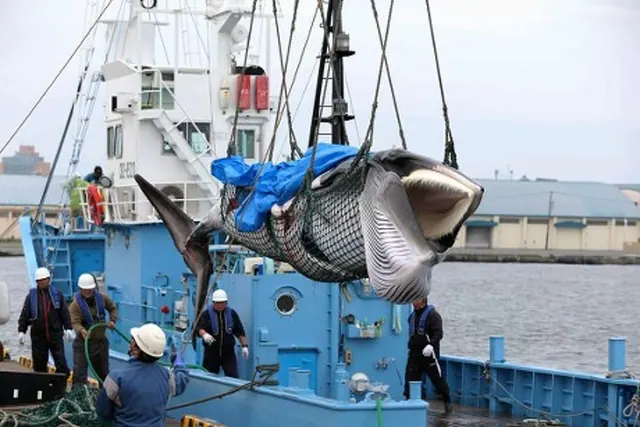
NOAA Fisheries lists sperm whales as endangered under the U.S. Endangered Species Act throughout their range. It identifies threats including fishing-gear entanglement, vessel strikes, ocean noise, marine debris and contaminants.
Those pressures warrant attention without assigning the species an unsupported deadline for extinction. The original story's precise global population figures are not treated here as a current census. The archival whaling photograph illustrates human exploitation of whales; it doesn't document a recent event or an animal from the communication studies.
Following the Evidence Further
The research has moved from describing click patterns to examining finer details of their acoustic structure. Researchers can keep testing those findings against recordings, the identities of the animals and observations of their behavior.
For now, the alphabet comparison is a way to understand an increasingly detailed picture of sperm whale communication. The evidence supports complex, patterned signals. Establishing the meanings of particular sequences requires additional work, and protecting the animals needn't wait for a translation.