Animals
Koko, Her Kittens and the Questions She Left About Animal Minds
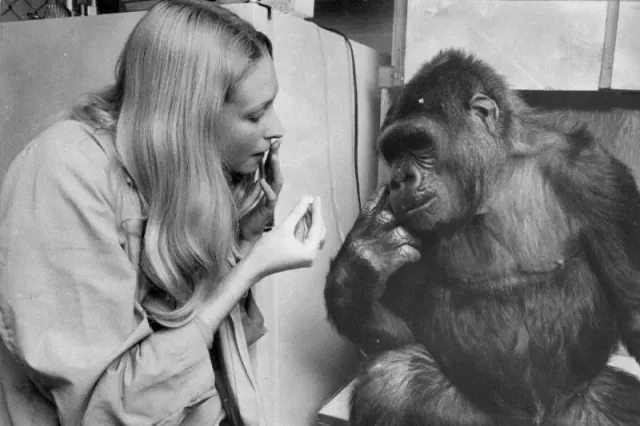
Koko was a gorilla who drew worldwide attention to the lives of her species. Her caregivers reported that she used more than 1,000 signs and understood about 2,000 spoken English words. She also painted, learned to blow into a recorder and became famous for her time with kittens. Researchers have disputed the claims about her mastery of language. The photographs, though, reached people who had never heard of the debate. Many first knew Koko as the large gorilla holding a very small cat.
A Sad Scene on Television
If you've ever cried at a movie, you'll understand why this story caught on. Koko's caregivers said she reacted to the goodbye scene in Tea with Mussolini, when a young boy parts from his family. They reported the signs ‘sad,’ ‘cry,’ ‘trouble’ and ‘mother.’ To them, she appeared upset by the separation. It was their interpretation of her response, of course. Koko couldn't sit down for a movie review afterward. Still, watching that scene with her must have given them quite a bit to talk about.
A Recorder and a Research Question
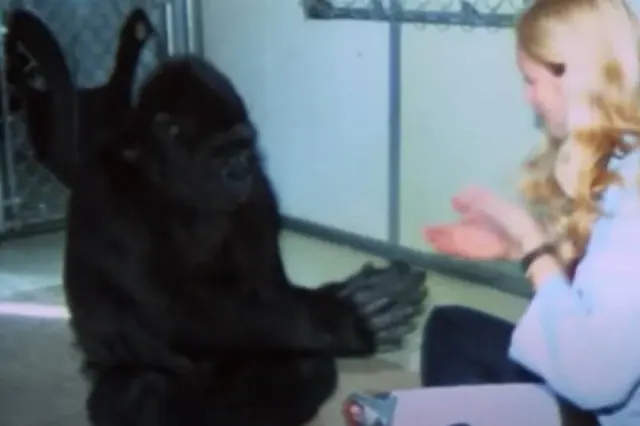
Koko learned to blow into a recorder. The instrument appears in photographs of her, held to her mouth as she makes a sound. Researchers later studied the way she used her breath and voice. Their 2015 paper in Animal Cognition described learned behaviors under voluntary control, including blowing into instruments. Playing a melody was not the claim. They were interested in the control she had learned over breathing and vocal actions, something they could examine in recordings of her everyday activities with her caregivers.
Paint, Paper and Two Gorillas
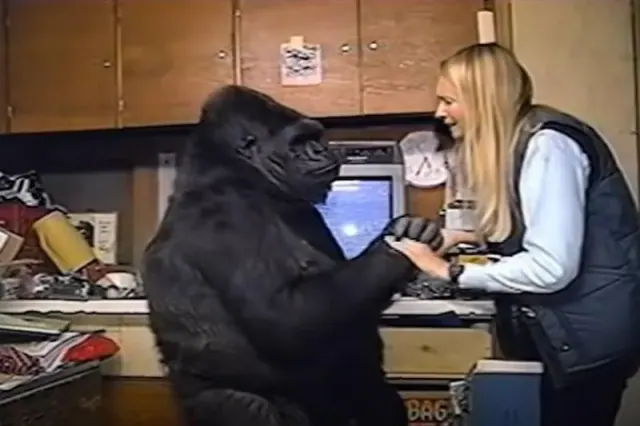
Koko and Michael both painted. They were given brushes and colors, and the work they produced was shared by the Gorilla Foundation. Their caregivers also described reactions to the paintings. In one account, the sign ‘toilet’ was taken to mean that an animal disliked a piece of work. That interpretation belonged to the team observing them. Visitors to the foundation's material could look at the paintings themselves, as well as photographs of the gorillas using their materials. Painting was one of several activities made available to them.
Koko and All Ball
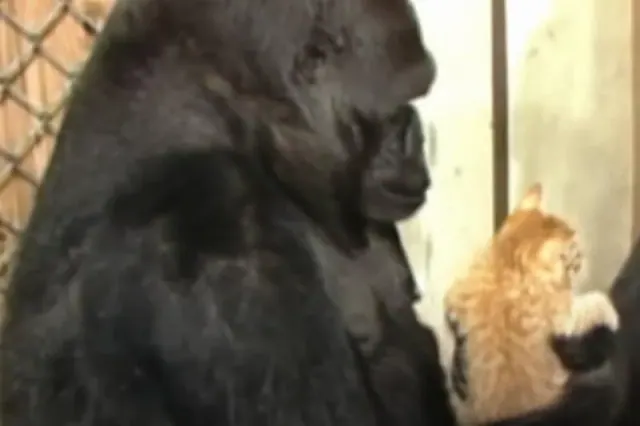
Koko was fond of stories about kittens, including The Three Little Kittens and Puss 'n' Boots, according to her caregivers. They offered her a stuffed animal, but reported that she signed ‘sad’ in response. Later, she was allowed to choose a real kitten from a litter. The kitten became known as All Ball. Photographs of Koko holding the small cat were widely shared, and the pair became one of the best-known parts of her story. Her caregivers continued to describe her interest in cats over the years.
A Ring, a Finger and a Bracelet
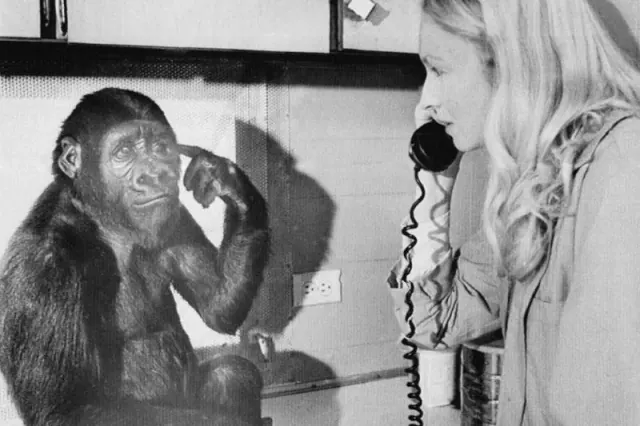
How would you describe a ring if you didn't have a word for it? Koko's caregivers had an answer they attributed to her: ‘finger’ plus ‘bracelet.’ It's a neat description, and one of the examples that made her famous. The harder question is what it proves. Critics of the signing-ape studies questioned how gestures were prompted and interpreted, and whether they amounted to human-like language. The example is still interesting. It just needs to travel with the information that people were translating what they thought Koko meant.
Food, Drink and More
Koko's first signs included ‘more,’ ‘food’ and ‘drink,’ according to the Gorilla Foundation. These were things she could request from the people caring for her. Patterson began teaching her when she was young, and the lessons continued as part of their life together. The project involved repeated observation of how Koko used the signs in familiar situations. Food and drink gave the team everyday opportunities to see her responses. Much later, the foundation would report a vocabulary of more than 1,000 signs built up over the years.
An Exchange About Death
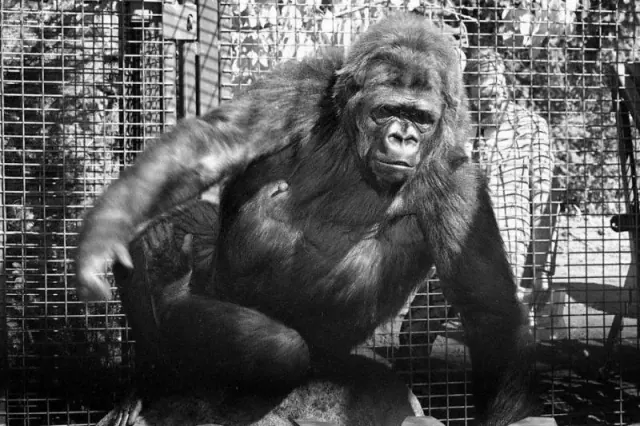
Koko's caregivers described asking her questions while showing her a skeleton. They interpreted her response as referring to death, and reported the phrase ‘a comfortable hole’ when she was asked where it would go. Patterson considered the exchange evidence of understanding. The account has often been repeated as a story about Koko and mortality. It remains a human translation of her gestures, however, rather than a way to establish exactly what she knew about death. The distinction matters when describing an animal's thoughts from a conversation recorded by its caregivers.
Decades With Penny Patterson
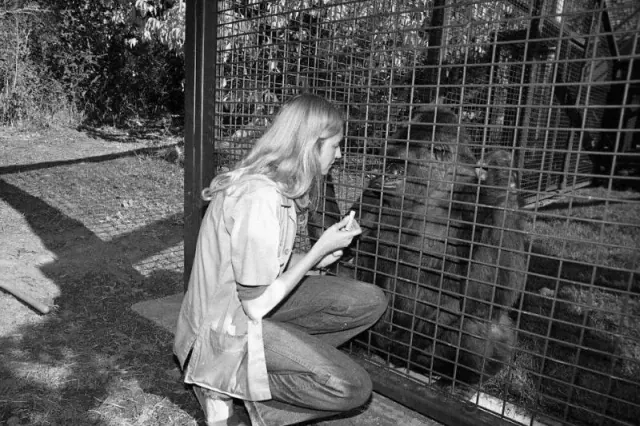
Koko and Penny Patterson had a relationship that lasted for decades. Patterson began working with the gorilla when Koko was about a year old. Over time, the Gorilla Foundation reported that she could use more than 1,000 signs and understand roughly 2,000 words of spoken English. The larger number was not her signing vocabulary. Patterson's work with Koko also meant years of daily care, play and familiar routines. She remained Koko's teacher and caregiver throughout the rest of her life, and appears beside her in many photographs.
Michael and a Difficult Story
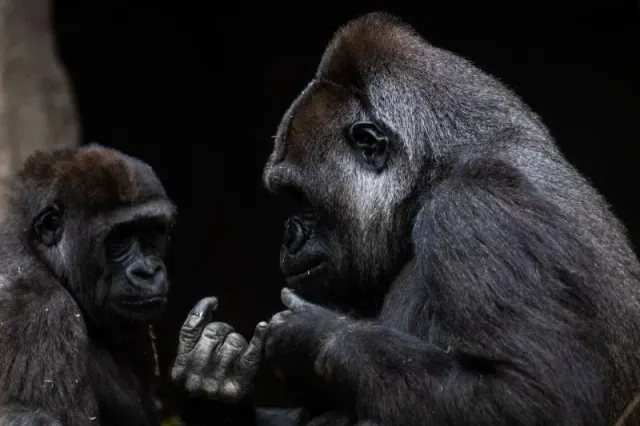
Michael was another gorilla who learned signs through the foundation's project. The team described an exchange they interpreted as his memory of his mother being killed by poachers. That interpretation was widely repeated, but the memory was not independently verified. It came from the people translating Michael's gestures. His story, alongside Koko's, brought public attention to gorillas and their protection. The photograph used here shows gorillas together for illustration. It does not show Michael describing the event, and it is not a photograph of his mother.
An Afternoon With Robin Williams
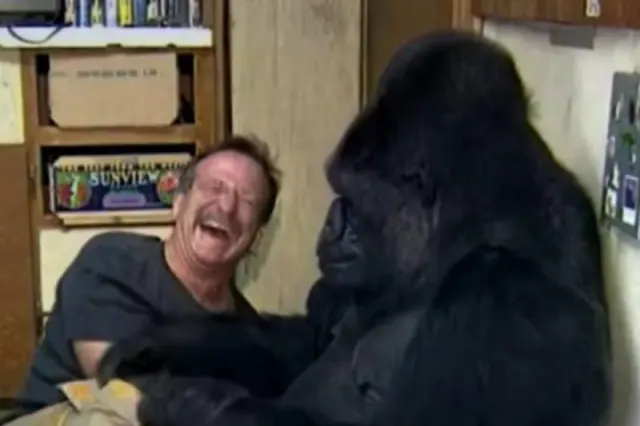
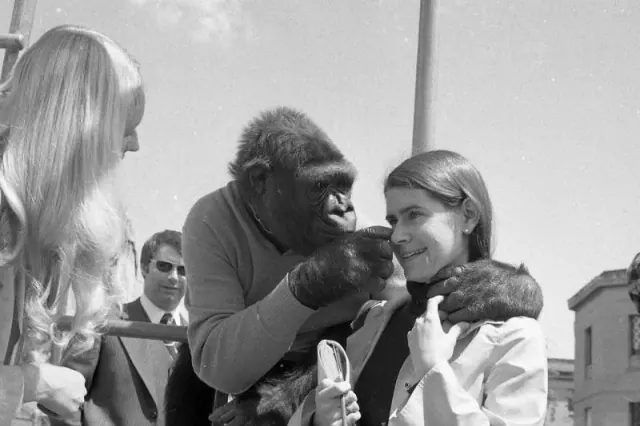
After Michael died in 2000, Patterson described Koko as subdued. The following year, Robin Williams came to visit her. He spent time with Koko, and footage of the meeting shows them interacting playfully. Patterson welcomed what she saw as a change in the gorilla's mood. The photographs of Williams and Koko became another familiar part of her story. They record a visit that the people around her remembered warmly, without establishing how she experienced Michael's death or how long any change in her mood lasted afterward.
The Quieter Routine of Finding Food
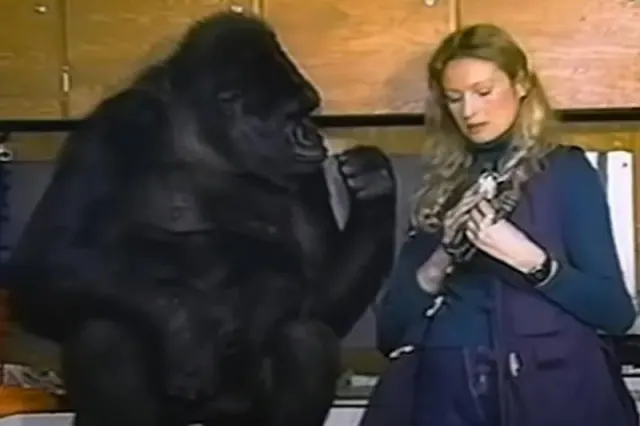
Koko's caregivers provided opportunities for her to forage for food. Their accounts describe plants, fruit and flowers among the foods she was given, with roses a particular favorite. Finding something to eat could become an activity in itself. The team made food available in ways that gave her opportunities to search and handle it. These daily routines took place alongside the signing lessons and other activities shown in photographs. They were part of the work of caring for Koko throughout the years she lived with the foundation.
Two Gorillas Learning Signs
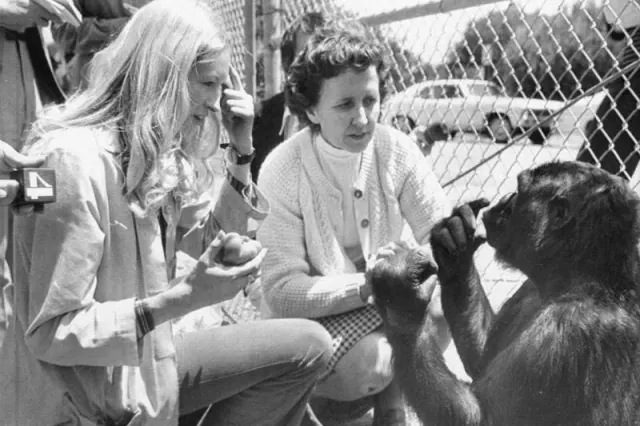
Koko and Michael both learned signs from their human caregivers. The Gorilla Foundation reported a vocabulary of more than 1,000 signs for Koko and about 600 for Michael. Those counts came from the project team, which observed the animals over many years. Their abilities have sometimes been compared with those of young children, but a vocabulary count doesn't establish an equivalent human age. Researchers have questioned the project's claims about language. The photographs and observations still provide a record of two gorillas living and learning around familiar people.
A Visit From Mister Rogers
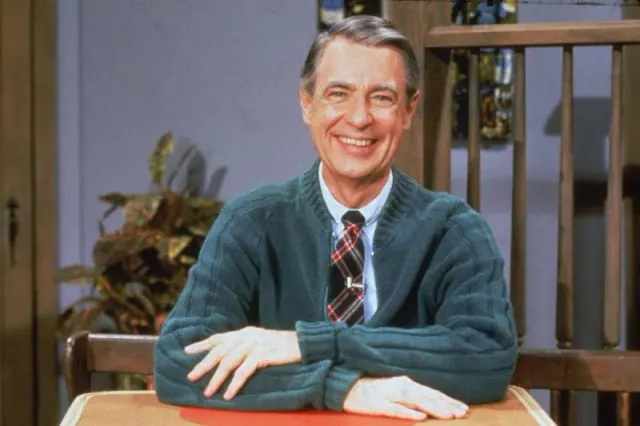
Koko watched television, and her caregivers said she was familiar with Mister Rogers' Neighborhood. When Fred Rogers visited, accounts of the meeting describe her helping him remove his shoes, as he did in the program. It became one of the memorable stories about her time with visitors. Rogers had spent years making television for children, with familiar routines repeated from one episode to the next. The picture in this gallery is a portrait of him; it is not a photograph taken during the meeting with Koko.
Familiar Objects and Curious Hands
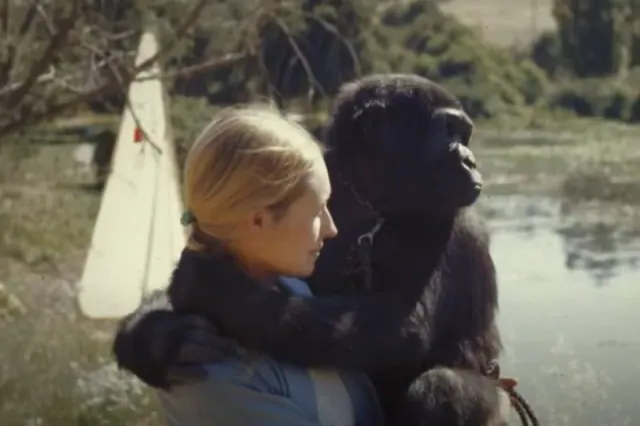
Koko's caregivers described her as playful and curious, with moments when she seemed shy. A familiar blanket was among the objects associated with her. They watched her explore things brought into her surroundings and spent time with her during lessons and play. These accounts came from people who knew her daily routines. The photographs show some of those surroundings and the people who shared them. Her life included quiet days with familiar objects as well as the visits and unusual exchanges that attracted the most public attention.
Looking in the Mirror
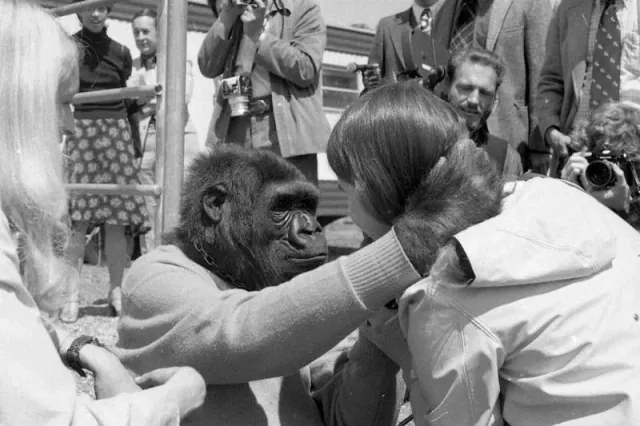
Patterson reported seeing Koko use a mirror to examine a mark inside her mouth. She considered this evidence of self-recognition and also described the gorilla looking at herself and grooming in a mirror. Koko had spent years around humans and familiar objects, including mirrors. The observations need to be understood in that setting. A response to a mirror does not measure every aspect of an animal's intelligence. Patterson's account offered a record of what she saw one gorilla do, after a long period of learning and experience.
Birthday Cards From Far Away
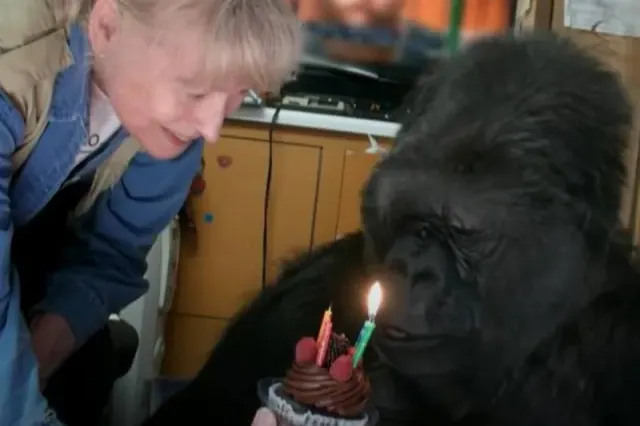
Koko's supporters celebrated her birthdays by sending cards and presents. The Gorilla Foundation shared updates and photographs with people following her life. Children who had seen her with kittens could learn her name and hear more about gorillas through those stories. Koko died on June 19, 2018, aged 46. Her photographs continued to be shared afterward, reaching readers who had not followed the project while she was alive. The birthday celebrations remain part of the foundation's record of the public interest surrounding her over many years.
Talking About What Was Absent
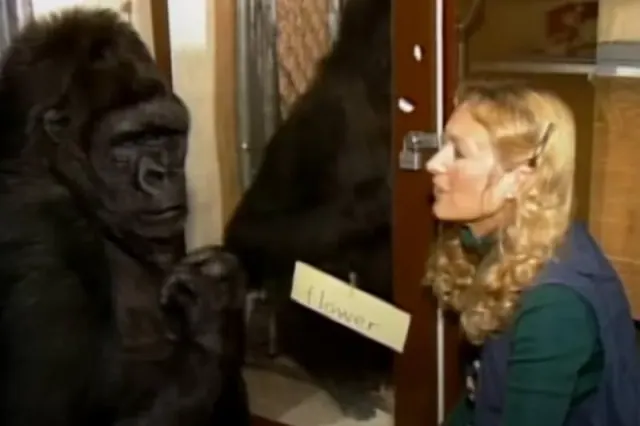
Koko's caregivers believed she could refer to people and things that were not present. Researchers use the term ‘displacement’ for communication beyond the immediate situation. The team's accounts of these exchanges became part of the discussion about her language abilities. Critics questioned how the signs were elicited and translated, and whether the evidence supported the claims. Reading the exchanges requires attention to those interpretations. They were recorded by humans working closely with Koko, and their descriptions remain the basis for many of the stories told about her.
The Fireworks Child
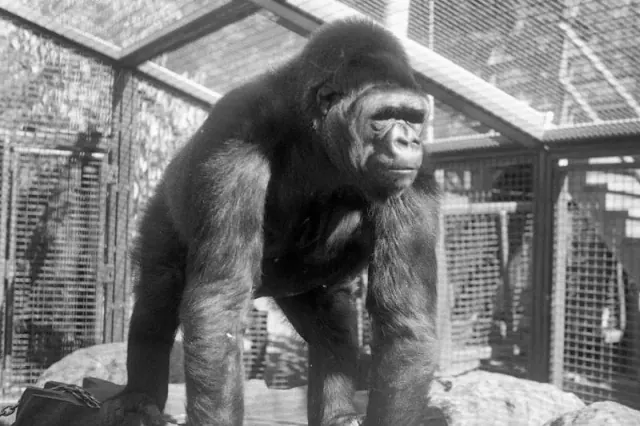
Koko was born on July 4, 1971, at the San Francisco Zoo. Her full name was Hanabiko, usually translated as ‘fireworks child’ in reference to her birthday. Her parents were Jacqueline and Bwana. In time, the shorter name Koko became familiar to people far beyond the zoo. The early photographs show a young gorilla beside the adults caring for her. Patterson began working with her when she was about a year old, starting a relationship that would continue through the rest of her life.
Kittens and the Question of Motherhood
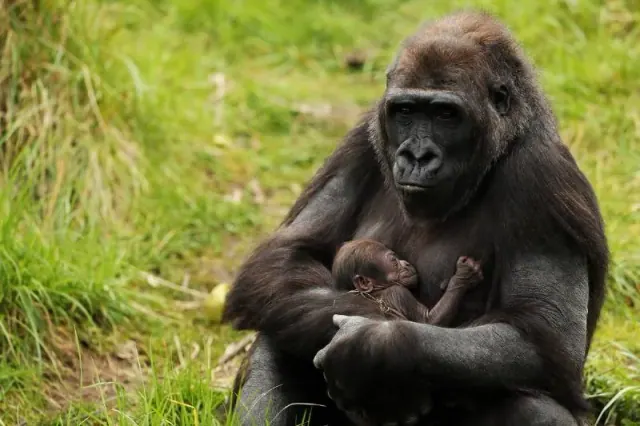
Koko was known for holding kittens, and her caregivers reported her using the sign ‘baby.’ Patterson believed that she wanted to become a mother herself. That was her interpretation of the gorilla she had known for decades. Koko never had offspring. The mother and baby in this photograph are other gorillas, included for illustration; they are not Koko and a child. The photographs with kittens show the small animals she did spend time with, while Patterson's comments describe what she believed those encounters meant to her.
The Pictures and the Questions Remain
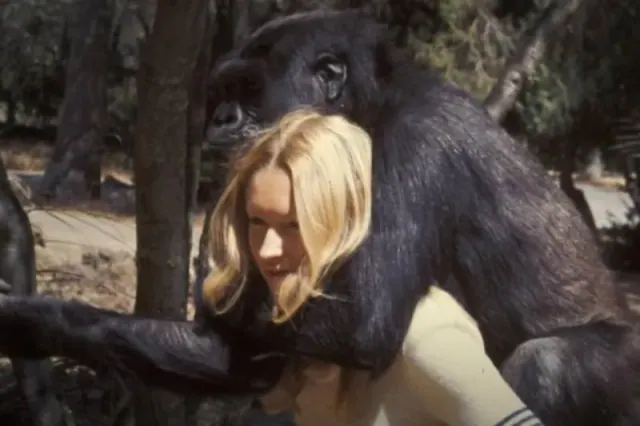
Koko's life was documented in photographs, recordings and years of observations by her caregivers. Patterson believed the signs gave Koko a way to describe her world. Other researchers disputed the language claims and asked for stronger evidence. That debate remains part of her story, alongside the pictures that made her famous. Koko with All Ball, Koko painting and Koko beside a familiar person each show something of the activities in her life. They gave people around the world a gorilla they could recognize by name.