Animals
Why a Gray Whale Off Nantucket Surprised Researchers in 2024
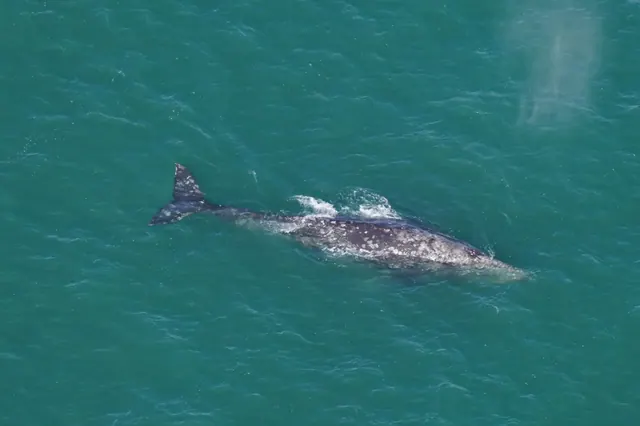
A whale feeding off Nantucket gave researchers a reason to look twice on March 1, 2024. The New England Aquarium team had found a gray whale, an animal normally associated with the Pacific, about 30 miles south of the island.
The sighting was remarkable because gray whales had disappeared from the Atlantic centuries earlier. It was a visitor from a surviving species, rather than an animal returning from global extinction.
An Unexpected Visitor
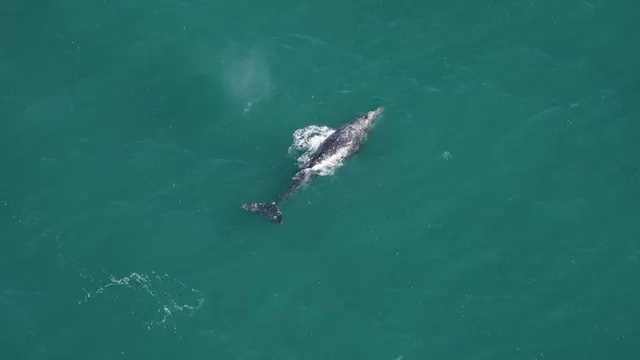
The aquarium's March 2024 account describes the whale repeatedly diving and surfacing, apparently feeding. The survey aircraft stayed nearby for 45 minutes while the observers gathered photographs.
Those pictures let the team check what they had seen. Researchers Orla O’Brien and Kate Laemmle were aboard the plane, watching an animal they would not normally expect to encounter during their New England surveys.
What Makes a Gray Whale Recognizable?
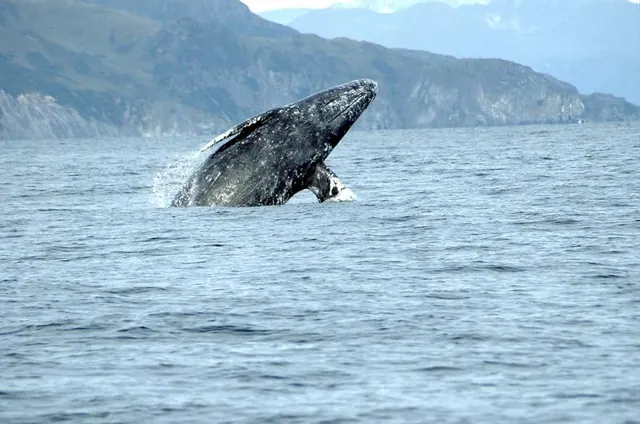
A gray whale has mottled skin and lacks the tall dorsal fin many people associate with whales. Instead, a hump and a line of smaller bumps run along its back toward the tail.
These features help distinguish the species. Photographs also give researchers a record they can examine after an encounter, when the animal is no longer at the surface.
Possibly the Same Whale Seen in Florida
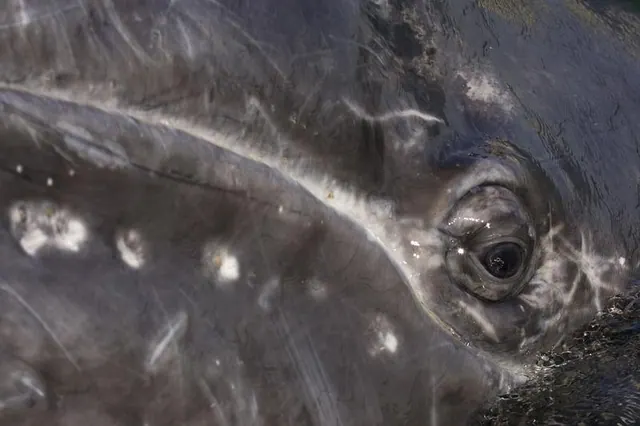
The aquarium researchers believed the Nantucket visitor was the same gray whale reported off Florida in December 2023. That was their interpretation of the sightings, not a continuously tracked journey between the two locations.
The dates help put the story in place. This was a documented encounter in early 2024, with a possible connection to a sighting several months before.
A Possible Route Through the Arctic
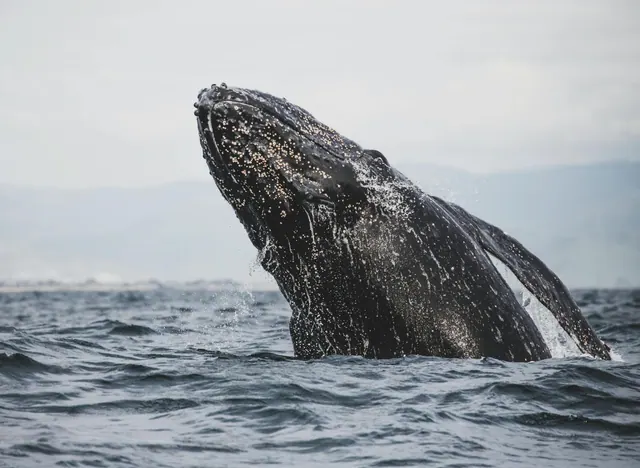
Researchers pointed to the Northwest Passage as a possible explanation for gray whales reaching the Atlantic. The route connects the two oceans through the Canadian Arctic, where summer ice conditions can sometimes allow passage.
An available route does not prove that this individual followed it. The aquarium's explanation concerned how changing conditions could make such travel possible; the sighting itself did not map the whale's full migration.
Less Ice Can Also Affect Food

A more open Arctic is not automatically better habitat for gray whales. A 2023 study in Science linked eastern North Pacific population changes to both access to feeding grounds and the amount of prey available there.
Many gray whales feed on small animals living on the seafloor. Changes in ice, currents and the food reaching that habitat can affect how much nourishment the whales find.
Why One Encounter Matters
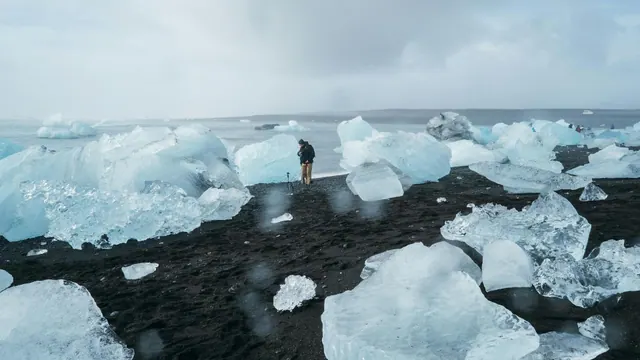
A rare sighting becomes more useful when it comes with photographs, a location and a date. Those details give future observers something concrete to compare with another encounter.
They also put limits on the story. Seeing one whale in a place tells us that it reached that place. Establishing a regular migration or a breeding population would require much more evidence.
An Atlantic History With Open Questions
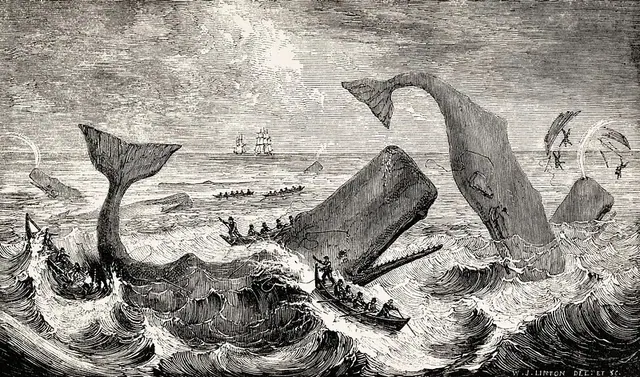
Gray whales once lived in the Atlantic, but their historical disappearance is still not fully understood. Smithsonian researchers describe environmental change and possible human pressures as parts of that history, with uncertainty about their relative importance.
The old whaling illustration in this gallery depicts sperm whales. It provides historical context for whaling, while offering no direct evidence about the fate of Atlantic gray whales.
Pacific Populations Have Different Histories
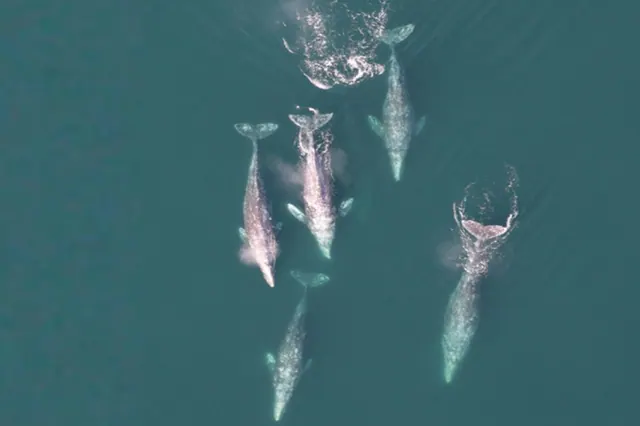
Gray whales continue to live in the eastern and western North Pacific. Those populations should not be treated as a single conservation success story.
NOAA records that the eastern population was removed from the U.S. endangered species list in 1994. The western population remains listed as endangered. Neither designation establishes that a new population has formed in the Atlantic.
What the Newer Counts Show
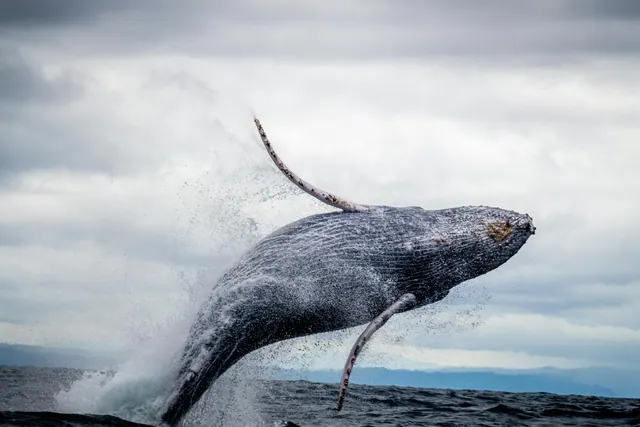
NOAA's population update, revised in October 2026, adds caution to the Pacific picture. Estimates fell sharply after 2016 and have fluctuated in more recent surveys. An apparent increase in the 2025–2026 estimate came alongside continued low calf production.
The agency says changes in migration, detection and analysis may help explain the swings in estimated abundance. A higher count along the California coast cannot simply be read as an equivalent increase in births or survival.
Watching More Than Whale Numbers
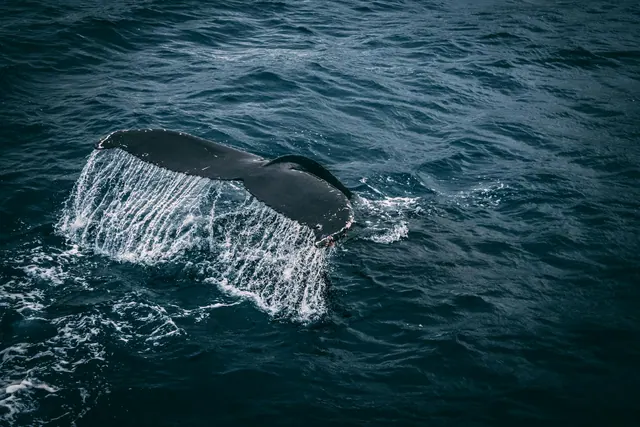
Following a population means looking at its food, body condition and reproduction as well as the number of animals counted. The 2023 research brought several of those records together to examine periods of growth and decline.
That broader view helps explain why an adaptable, wide-ranging whale can still face pressure when feeding conditions change. Reaching a new stretch of ocean does not remove the need for reliable food.
A Visitor, With More to Learn
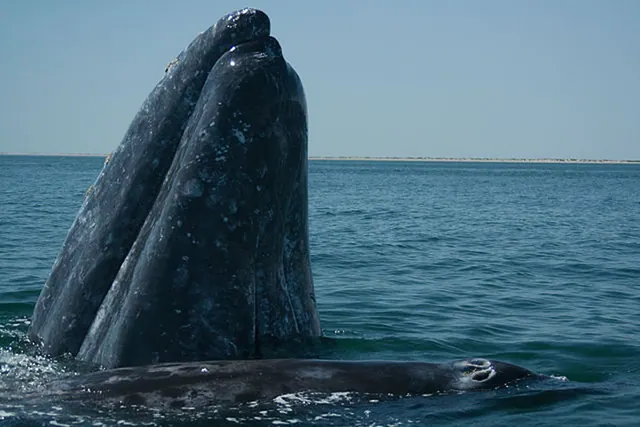
The Nantucket whale joined a small set of recent observations beyond the Pacific. In its 2024 account, the aquarium reported five observations in Atlantic and Mediterranean waters over the preceding 15 years.
Those encounters raise questions about where gray whales may travel next. For now, the photographs preserve a striking visit, while the question of an established Atlantic population remains open.