
From the archive
Can Cats Eat Turkey? What Matters Before You Share a Bite
Prefer Family & Pets on GoogleSee more of our stories in your results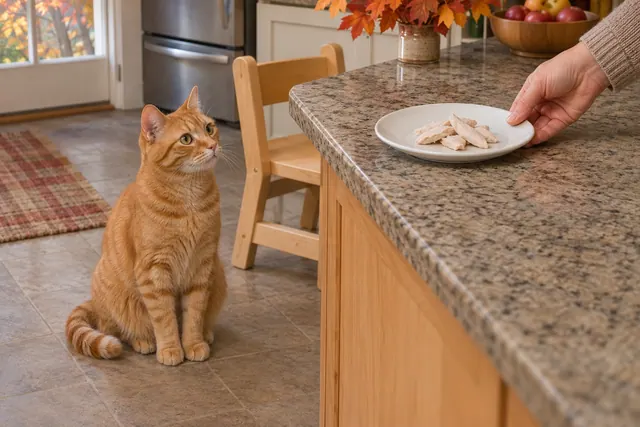
Can a cat share a bite of holiday turkey? Yes, in one narrow form. ASPCA Poison Control says a small bite should be boneless and fully cooked, and VCA Animal Hospitals calls plain turkey breast acceptable for most pets. Whether your own cat should have it is a separate question, and it belongs to your veterinarian.
The holidays bring a few things to a cat’s eye level that don’t normally end up there. A guest may set a half-finished plate on a low table. Leftovers may sit out while people clear the room. The warnings attach to what comes with the meat, including skin, bones, string, stuffing and seasonings.
The short answer on plain turkey
ASPCA Poison Control suggests keeping your cat on its regular food. If you share a bite of turkey, ASPCA specifies that it should be cooked through and boneless. VCA Animal Hospitals describes plain turkey breast as an option for most pets and says to avoid turkey skin and bones.
That makes the treat small and optional. The regular diet stays the center of the cat's day, and the turkey is an extra placed beside it.
The exceptions matter. A cat on a prescribed diet or one managing a health condition is a reason to ask the clinic before the holiday, when someone can answer calmly, rather than during the meal. Veterinary review is also the right step before turning a one-day treat into a habit.
What a small plain treat looks like
Plain is a narrow word. It means meat with nothing added: no stuffing pressed against it, no seasoning blend, no sauce from the pan. The piece should be fully cooked and checked for bone before it goes anywhere near a bowl.
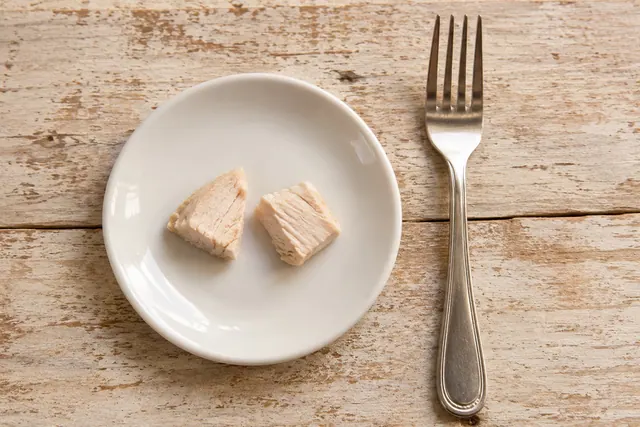
Size follows from the word small. A bite is a taste, and the guidance from ASPCA Poison Control is built around exactly that. Offering it by itself, in the cat's usual spot, keeps it apart from the plates and platters where the hazards pile up.
A practical objection is that this sounds like a lot of rules for one bite. It is, until the rules shrink to a habit: keep a piece of plain cooked meat apart from the seasoned dishes, check it for bone, and hand it over. Everything else on the table stays on the table.
Skin and bones are the parts to leave out
VCA warns against both skin and bones in its holiday advice, even as it calls plain turkey breast acceptable. The turkey that gets approved and the turkey that gets warned about can come off the same bird, so the carving board is where the decision actually happens.
VCA's feline guidance sorts holiday dangers into two groups. One is fatty or toxic leftovers. The other is foreign objects, meaning swallowed items that are not food, and its examples are bones and trussing string. Bones, then, are an object problem, not a menu choice.
That helps in reading the wording from ASPCA Poison Control, which asks for boneless and fully cooked. A piece has to meet both conditions, and a piece that meets only one does not qualify.
Seasonings, stuffing and trussing string
Stuffing is where the kitchen's ingredient list gets long. ASPCA Poison Control identifies onion and garlic, and VCA names onion, garlic and chives in stuffing and casseroles. Those are the ingredients to look for when deciding whether a side dish is a candidate for sharing, and the answer for stuffing is no.
Casseroles follow the same logic as stuffing. VCA names them alongside it, so a casserole that looks harmless still belongs on the list of things the cat does not share.
Seasonings deserve the same suspicion, because a seasoning blend can carry the same ingredients and a cat cannot be told what is in it. The plain-turkey rule removes that guesswork. If the meat has a coating, a rub or a sauce, it is no longer the plain turkey the guidance describes.
Trussing string is the item that is easy to forget, because it belongs to the roasting, not the meal. VCA's feline guidance lists it beside bones as a foreign object. Remove it when the bird comes out, and treat it as part of the waste, not the leftovers.
Where the plan can fail
A plain-turkey rule works best when everyone at the table knows it. Where it can fail is a well-meant hand reaching down with a piece that was never checked. A skin-on slice from a plate or a spoonful of stuffing is exactly what the guidance excludes, and the person offering it may not know that.
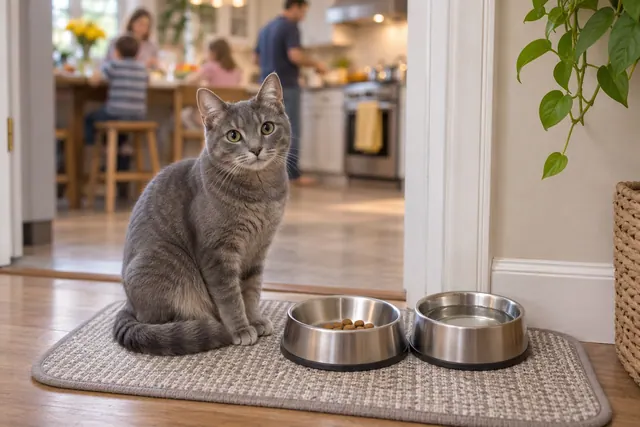
One person, one prepared piece, one moment: that is a workable way to hold the line. Telling guests in advance that the cat's treat is already handled gives them a way to be generous without improvising.
Keep the plate and carving board out of reach even when everyone has heard the plan. A cat may still get to a piece someone leaves behind when they move from the table to the kitchen.
If your cat ate something concerning
Call your veterinarian or ASPCA Poison Control if you suspect poisoning. The ASPCA’s holiday guidance identifies onion and garlic as ingredients of concern. A dish that includes either one deserves a call.
VCA says to call your veterinarian promptly if you think your cat swallowed a foreign object. A turkey bone or a piece of trussing string falls into that category. Tell the clinic which one you think the cat got into.
If you can tell what was eaten, say so when you call. A cutting board with a piece of string missing gives the clinic a different question from a spoonful of casserole. Share what you know and what you’re unsure about.
Finding the clinic's holiday hours and the poison-control contact before the meal means the information is already in hand if it is needed.
Looking at the table again
Give the carving board one more look before the plates go out. Does the piece contain skin or bone? Has it been sitting in stuffing or sauce? What looks like one bite at the table can be a few ingredients mixed together. Your cat’s usual food has the advantage that you already know what’s in the bowl.
The open question is your own cat. A veterinarian can weigh the cat's history, diet and health conditions against a general rule, and a short call before the holiday can settle it.
Before dinner, check what you put aside. Leave out skin, bones, string, stuffing, sauces, seasonings and rubs. A piece is an option only if it’s plain, fully cooked and boneless. Your cat’s regular food can be the whole holiday meal.