
Pets
How Dogs Worked, Hunted and Lived in Medieval Europe
A dog in medieval Europe might help move livestock, guard a household, follow a hunt or keep someone company indoors. Its place depended on the household and the work expected of it.
Manuscripts and other surviving records let us see some of those relationships. They show people handling, feeding and caring for dogs.
A Dog's Job Shaped Its Place
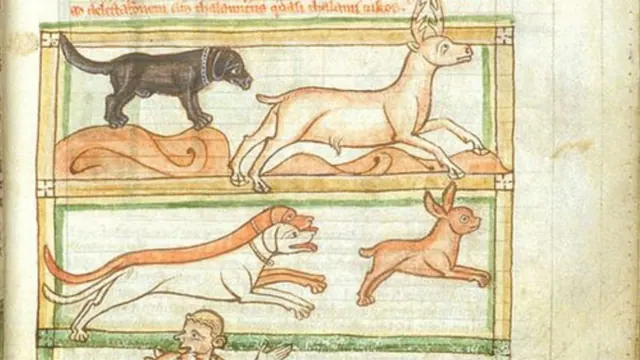
Hunting dogs attracted attention in wealthy households, but that is only part of the history. Historian Carole Rawcliffe's research on late medieval English towns follows working dogs whose lives receive less space in grand illustrations.
A prized hound and a butcher's dog could be valued for different reasons.
Care as Well as Work
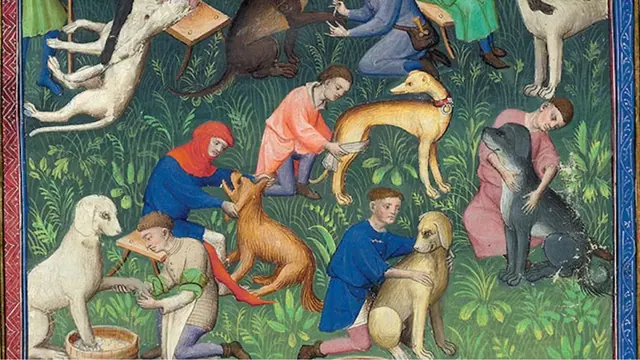
A kneeling handler combing a dog is a familiar-looking scene in an unfamiliar setting. Getty's medieval pet discussion includes A Hunter Combing a Dog, a French manuscript illumination dated about 1430–1440.
The scene records the everyday handling behind a hunt, with a person attending to an animal's coat.
Greyhounds and Rank
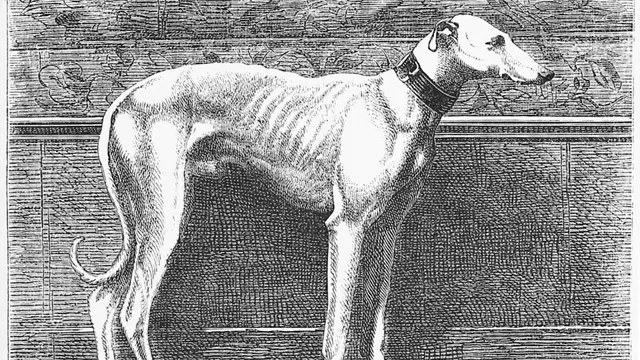
The Swedish History Museum describes greyhounds among the dogs kept by princes and wealthy nobles. It also explains the meanings a greyhound could carry on a tomb slab: noble birth, speed and courage.
In a memorial, the animal may therefore convey something about the person being commemorated, alongside any connection with an actual dog.
Small Dogs in the Household
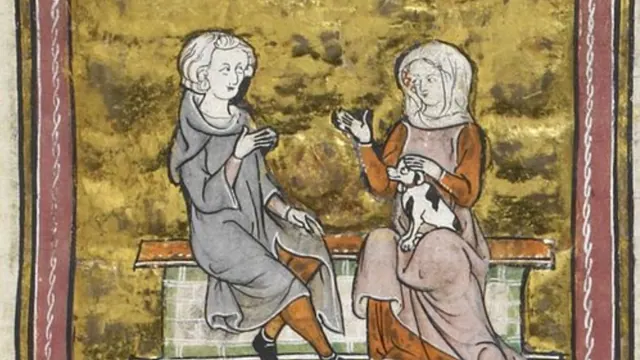
Companionship also had a place indoors. Getty's account describes people keeping cherished pets, with particularly pampered animals in high-ranking households. Small dogs belong in that broader picture of animals sharing human living spaces.
The illustrations here show figures holding small animals close. They preserve artists' representations of contact without identifying every animal or owner.
Praise Was Not Universal
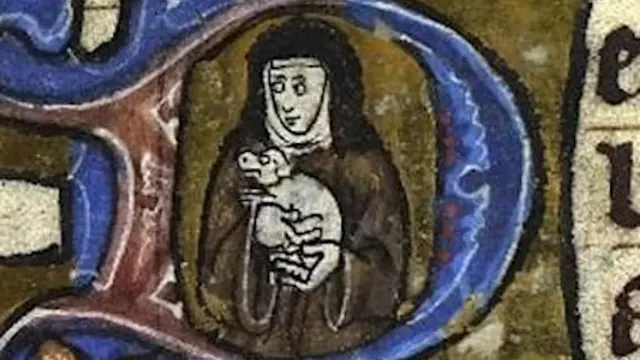
Writers could judge dogs through the same divisions of status that shaped human society. Rawcliffe discusses physician John Caius's classification of dogs by their occupation and standing. The English translation of his work appeared in 1576, after the medieval period.
That is a later account of status, rather than a medieval survey of attitudes toward lap dogs.
What a Memorial Can Mean
Dogs also appear as signs of loyalty and marital fidelity, as the Swedish History Museum explains. A carved animal might communicate an idea the patron wanted viewers to recognize.
That leaves room for affection and symbolism together. It doesn't establish that every dog at someone's feet is a portrait of a specific pet, or that every memorial tells the same story.
Working Dogs Beyond the Court
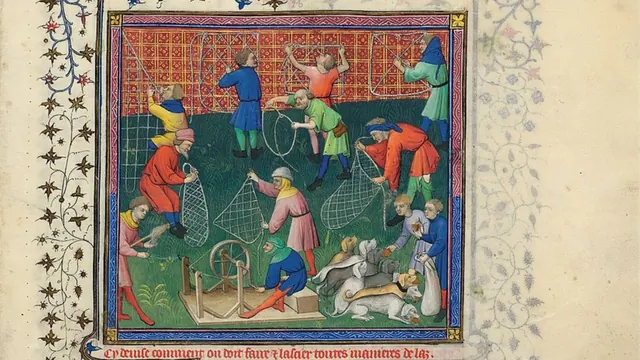
In late medieval English towns, some dogs helped butchers drive livestock. Rawcliffe's study also traces the problems that large or roaming dogs could cause, and efforts by towns to restrain them.
Being useful did not guarantee a comfortable life or a welcome everywhere. Local records make this side of the story visible alongside the better-known pictures of hunting packs and favored companions.
A Place Near the Table
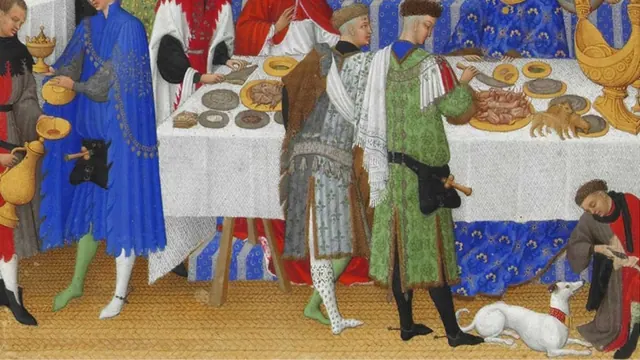
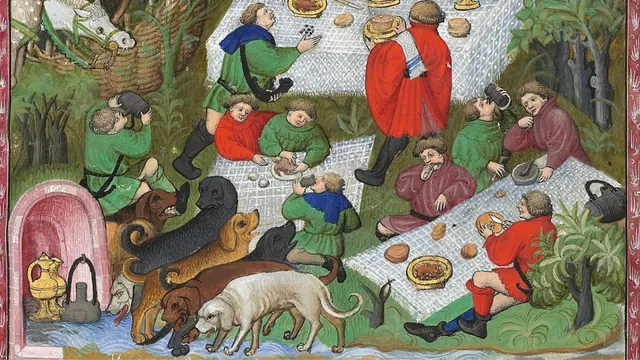
Look closely at the banquet scene pictured here. A pale dog lies on the floor near a richly dressed diner, and a figure bends down toward it. The animal occupies space within a ceremonial household gathering.
An image can preserve that particular arrangement without settling how dogs were treated at every meal. A scene made for an elite patron gives us a view of that setting, rather than a household rule for all Europe.
Guarding and Herding
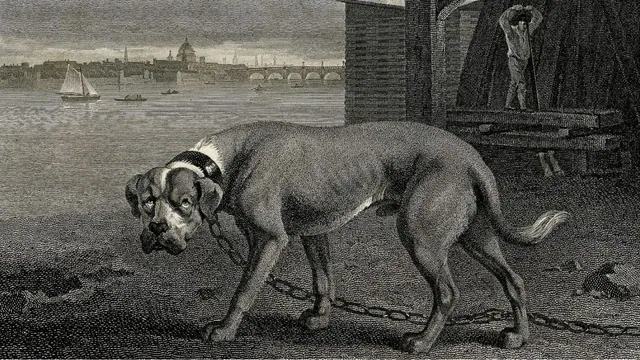
The Swedish History Museum places sheepdogs, guard dogs and hunting dogs among the working animals on medieval farms. These jobs tied dogs to the practical routines of keeping property and livestock.
The labels describe what an animal did. They shouldn't automatically be turned into modern pedigree identities: a historical word for a type of working dog does not supply a present-day breed certificate.
Learning to Follow the Hunt
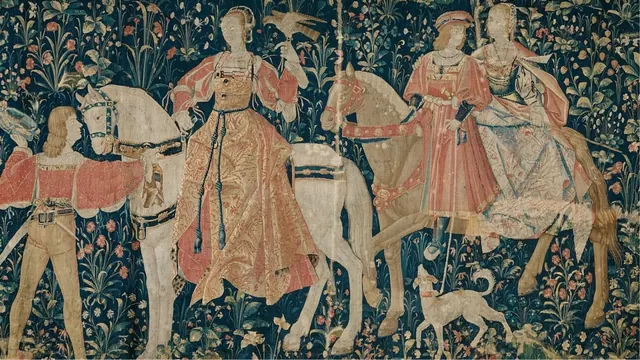
Training appears in the surviving imagery too. The Morgan Library's catalogue describes a Paris manuscript scene, dated about 1406–1407, in which a man holds a dog's leash beside a grain field, with a hunting horn hanging from a strap.
The quiet preparation belongs to the hunt just as much as the chase. The handler, leash and dog are shown working together before any pursuit is visible.
A Book With Dogs at Its Center
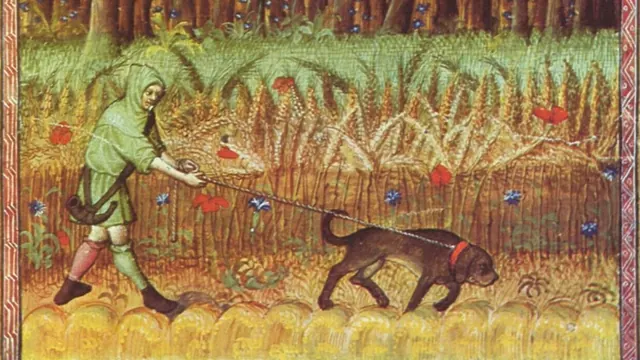
Gaston Phébus wrote his hunting book between 1387 and 1389. The Library of Congress describes its subjects as including the maintenance of hunting dogs alongside different methods of hunting.
That surviving practical material gives dogs more than a decorative role. Their care and training were subjects worth recording in detail, with different tasks and types of animals considered within the same work.