From the archive
Do Cats Remember People? What Two Voice Experiments Found
Prefer Family & Pets on GoogleSee more of our stories in your results
What does a cat do when it hears a familiar voice and the person is nowhere in sight? In one playback study, cats whose reactions had faded during unfamiliar calls responded more strongly when they heard their owner. Neither experiment followed what happened to the same cat’s recognition after a separation of weeks or months. In the 2013 study described by the University of Tokyo (in Japanese), those responses were small. The researchers worked with 20 cats in their homes. Ear and head movements were common responses; meows and tail movements were much less common.
A 2021 experiment with 50 cats, published in PLOS ONE, took that question a step further. The researchers asked what happened when a familiar voice came from one spot and then, a moment later, from a different one.
Why a turned ear counts as data
Atsuko Saito and Kazutaka Shinozuka visited 20 cats at home. With the owner out of sight, the researchers played recordings of three strangers calling the cat’s name, one after another. Then came a recording of the owner, followed by a fourth stranger. Each call was separated from the next by 30 seconds, and the speaker sat just outside the room. The cat could hear the caller without seeing a person there.
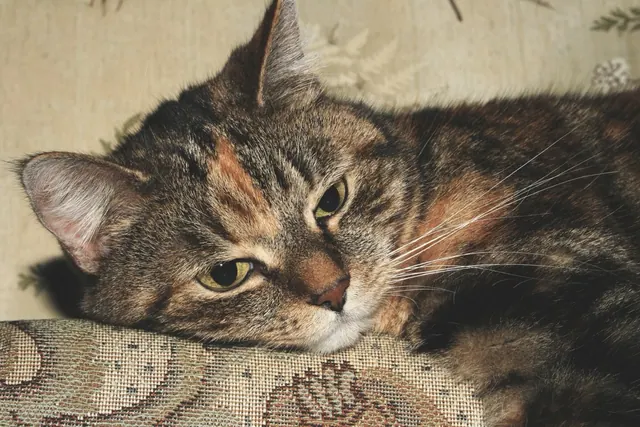
For 15 of the 20 cats, the reaction was weaker by the third stranger's call than it had been on the first. In that group of 15, the response picked up again when the voice belonged to their owner. The cats were most apt to move an ear or a head. A meow or a tail movement was relatively rare, even when it was the owner calling.
The Tokyo team also wanted a measure of how strong a reaction was. Ten people rated video clips on a scale from zero to three, watching the cat without hearing the original call. The researchers compared the owner and third stranger in the 15 cats whose reactions had already faded with the unfamiliar calls. That matters: the apparent return of attention was a result for that subset, rather than something they measured the same way across all 20 cats.
The two-speaker experiment
Takagi and colleagues started with a speaker just outside a door. It played five calls from the cat’s owner, or from the main caregiver for the 27 cats that lived at cat cafés. The cat could move freely during the trial. Then the researchers played one more call, either from the speaker outside or from a second speaker inside the room near a door or window.
The test call was either the same recording of the owner or a recording of a stranger calling the cat’s name. The two speakers were at least four meters apart, and this final call came just 2.5 seconds after the last one. Eight raters watched video clips and scored the cat’s apparent surprise from zero to four. In the clips they saw, the researchers had replaced the speech with a plain tone.
The highest surprise ratings came when the same familiar voice played again from the other speaker. That was the standout condition among tests that also included the owner’s voice from the first spot and the stranger’s voice from either spot. Imagine hearing someone you know through the doorway, then hearing the same person from across the room before they have time to move there. The authors took the cats’ reactions as evidence that hearing the voice led them to expect the person in a particular place.
Did other sounds have the same effect?
Two more experiments let the team see what happened with other sounds. In one, they played recordings of a familiar cat. In the other, the sounds did not come from a cat or a person. Neither showed the pattern the researchers had seen with the owner’s voice. That difference keeps the finding tied to the human-voice experiment, where the cat had heard a person it knew.
How long does the memory last?
Think of the timing the next time you come home after a long trip. The speakers in the 2021 study switched within seconds. The 2013 study also played its calls in a single visit.

The question of feeling is separate, too. A cat can turn its head when it hears a familiar voice. That is something a person can see on a video. The videos give the researchers a way to compare reactions under different conditions; they do not tell us how much the cat missed a person. A cat that turns quickly and a cat that stays in its usual spot may still share the same familiar routine when the person comes in.
When the cat stays put
If your cat stays put when you call, the Tokyo study offers a good reason to look closer before drawing a conclusion. The researchers distinguished movements of the head and ears from vocal sounds and tail movements. A turned ear can show that a sound got the cat’s attention without telling you whether the cat wants to get up.
Here is one simple thing to look for: an ear held one way, then pointed toward the hall as someone speaks. When the cat is already looking that way, or you can’t see its ears clearly, there’s less to go on. One quiet moment is a poor basis for saying a cat either knows you or has forgotten you.
What to notice at home
The useful change is in what counts as evidence. Instead of asking whether a cat comes, notice smaller events when a familiar voice reaches it from another room: whether the ears turn, whether the head shifts, whether anything differs when the same voice comes from an unusual direction. Leave it at noticing, the way you might notice the cat look toward the door before you hear the person outside.
The next time somebody comes home and calls from the hall, watch what happens before the cat gets up, if it ever does. A brief turn may be the whole visible response. If you see only a flick, give it a second look. The quiet response has its own place in the story.
For another example of the gap between a visible action and an interpretation, read how Koko and her kittens became part of a wider discussion about animal minds.