
From the archive
Is That a Bison or a Buffalo? Start With the Shoulders
Prefer Family & Pets on GoogleSee more of our stories in your results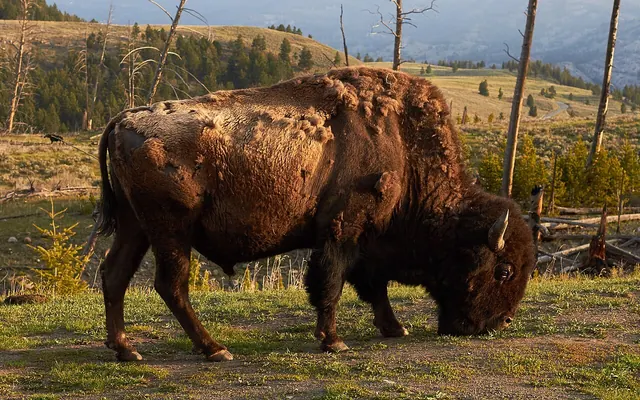
Imagine two pictures on a kitchen table. In one, a big brown animal stands with its head low and a rise over its front shoulders. In the other, two horns sweep across the top of a dark head. Someone calls the first one a buffalo. Someone else says the second one is a buffalo. Both may be using a familiar name for the animal in front of them. Start by looking at the whole body. The outline gives you more to work with than the word alone.
The National Park Service uses American bison for the North American species and recognizes buffalo as another name in North America. African buffalo and Asian water buffalo are different animals. You can see some of the differences by placing identified photos side by side, especially if you have a good view of the shoulders and the entire shape of the horns.
Find the rise in a bison’s back
In a side view of an adult American bison, follow the line from the top of the head toward the back. Look for a prominent rise right behind the head, over the forelegs. Then follow the back down toward the hindquarters. Seen all at once, the outline often looks weighted toward the front. That’s especially easy to see when the animal lowers its head.
The National Park Service describes a prominent hump above the shoulders. During winter, powerful muscles in the shoulders and neck help bison move their heads side to side to clear snow and reach food. That gives you a reason to remember where the hump is. It also makes the outline more interesting than a silhouette you’d memorize for a quiz.
The shaggy front is another clue. Look at the difference between the fur around the head and shoulders and the fur farther back. Then look up at the horns. The Park Service describes relatively short horns curving upward on both male and female bison. You might see only one horn in a profile photo. With a look from a different angle, you can see how each curves up beside the head.
Compare the buffalo photos one at a time
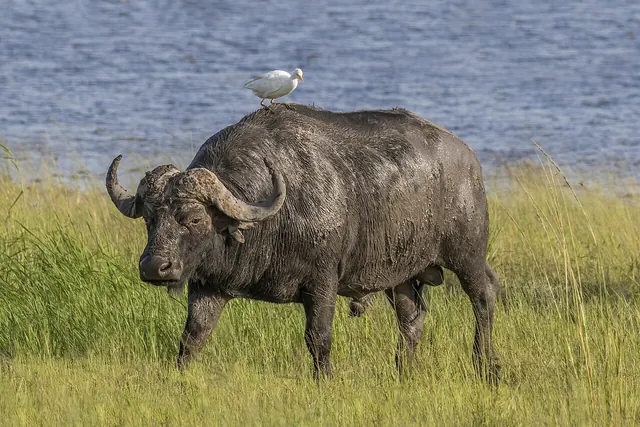
An African buffalo and an Asian water buffalo give you two different comparisons. Start with the Cape buffalo from Chobe National Park in Botswana. Look at how the horns extend out from the head and curve up at their tips. Then look at the line of the back and the fur around the face. Those are features you can compare directly with the bison in the first picture.
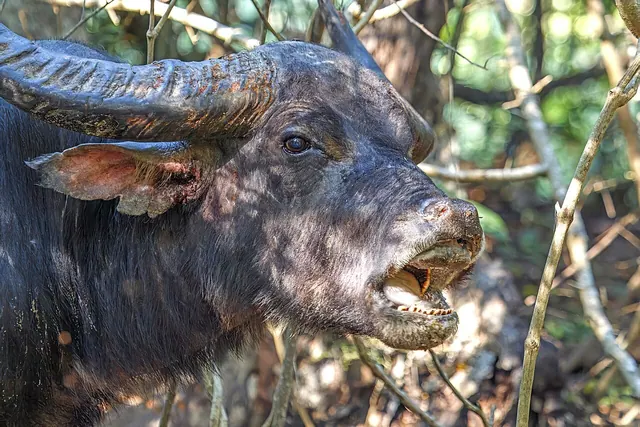
The pictured water buffalo is a separate example. Follow the horns from their base to their tip and pay attention to the way they extend out to the sides. Compare the view of the face with the bison’s short upward curve and heavier hair around the head. Horns can be difficult to compare between two animals when one is facing the camera and the other is turned. Drawing their outlines on a scrap of paper, or finding a second view, can help.
The place in an original caption is another clue. A Yellowstone photo and a Chobe photo come with very different settings. Location helps you check an identification that someone has already made. On its own, it leaves some room for doubt, since a photo could come from a zoo or a farm, and a repost may leave out where it was taken.
Try the same comparison with a calf
A young animal can spoil a perfectly good guessing game. The National Park Service describes newborn bison as reddish brown, without the conspicuous hump you see on the adults. In photographs of calves beside adult cows, look for that difference. If you had only a tight shot of the calf, several of the clues that worked on the adult would be missing.
Even with an adult, age, season and the angle can change what stands out. A photo with the head down makes the rise over the shoulders easier to see. A head-on photo may make it disappear behind the head. If your first guess rests on a single feature, check how much of the animal the picture actually shows. An identified full-body photo can answer a question that a close-up leaves open.
You can give a child the three photos without their captions and ask for a description before asking for a name. The first pass might be ‘short curved horns’ or ‘more hair on the front.’ A second pass can add where the really big change in height occurs along the back. The idea is to find a few features you could point to together, even if you come up with different words for them.
Then trade pictures and try each other's clues. A description that says only ‘big horns’ may apply to more than one of the animals in the set. A clue about where the horns curve, or about the line over the shoulders, usually tells the next person where to look. When neither of you can see a feature in a photo, mark it missing. That keeps the game fair even if you end up with a photo that shows only a face.
There’s room for both names
In North America the word buffalo has a long life of its own. The National Park Service recognizes its cultural use, including among Indigenous people. On a species label, American bison gets you to the scientific name Bison bison. At a family table, someone saying buffalo while looking at a Yellowstone animal may be using the same word they’ve known for it all their life.
That leaves you with a better way to talk about the pictures. Ask where each animal was photographed. Look together at the slope of the back, the hair on the front of the body, and where the horns start and turn. If a clue is missing, say what you’d need to see. Then read the original caption. You can learn to recognize a bison and hear someone call it a buffalo in the same conversation.
If you remember one view for the next photograph, make it a side view of an adult. You can see the shoulders and the rest of the back at once. From there, the head and horns give you something specific to check instead of a familiar-looking face.
Related stories




Rosa Benitez
Explains natural history and study methods for nonspecialist readers.